WORLD INNOVATION RANKING 2026: Skyscrapers City-States Roundup by Arch Town Labs
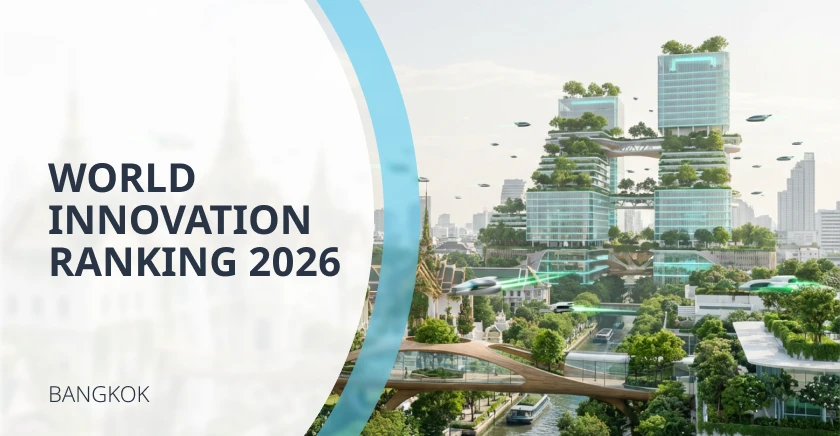
The global financial landscape of 2026 is no longer defined strictly by the old guard of western financial centers or even the established, saturated hubs of the Asian tiger economies. The center of gravity for venture capital, digital infrastructure, and regulatory innovation is shifting toward emerging megacities that are rewriting the rules of economic engagement. Bangkok stands at the bleeding edge of this transition. Moving aggressively beyond its legacy reputation as a manufacturing hub and a global tourism magnet, the Thai capital is systematically engineering its transformation into the financial and technological anchor of Southeast Asia.
This transformation is not occurring through passive organic growth. It is unfolding through a highly orchestrated convergence of deep tech integration, bold social legislation, and massive urban redevelopment. Bangkok in 2026 is a city of sharp contrasts and high-stakes maneuvering. It is a metropolis where world-class localized artificial intelligence models are deployed alongside ancient waterways, where multi-billion-dollar green mega-projects rise above historic districts, and where venture capital is actively migrating from saturated consumer applications into deep technology, climate resilience, and advanced medical innovation.
This comprehensive analysis deconstructs the trajectory of Bangkok as a city of the future. By examining its macroeconomic positioning, its unique blue ocean strategies, its foundational technological architecture, and the complex investment ecosystem fueling its growth, this report provides a granular view of a megacity in the midst of a profound structural metamorphosis. The data reveals a city that is no longer content to participate in the global economy, but one that is actively redesigning its underlying operating system.
Visiting card: the macroeconomic status of the city in 2026
In the final quarter of 2026, Bangkok officially steps onto the ultimate stage of global finance as the host city for the 2026 Annual Meetings of the International Monetary Fund (IMF) and the World Bank Group. Scheduled for October 12 to 18 at the Queen Sirikit National Convention Center (QSNCC), this event is widely referred to as the Olympics of Finance. It brings together over 15,000 delegates, including central bank governors, finance ministers, private sector executives, and sovereign wealth managers from 191 countries.
Hosting this summit for the second time (the first being in 1991) is not merely a logistical achievement. It is a calculated geopolitical signaling mechanism. The theme of the 2026 summit, "Thailand’s New Horizons: Empowering People, Building Resilience," perfectly encapsulates the current macroeconomic status of Bangkok. The city is aggressively marketing itself as a safe harbor for global capital amidst escalating geopolitical tensions and regulatory crackdowns in other Asian tech hubs. By positioning itself as a central pillar of stability, Bangkok leverages its unique hospitality culture to foster multilateral economic dialogue.
The economic engine of Bangkok in 2026 has fundamentally decoupled from the speculative, high-burn consumer tech funding models that dominated the early part of the decade. Instead, the digital economy of the city is projected to grow at 4.2 percent in 2026, which is double the national gross domestic product growth rate. This expansion is driven almost entirely by targeted investments in artificial intelligence adoption, advanced data center expansion, and corporate digital transformation. Capital markets are maturing rapidly alongside this tech boom. The Stock Exchange of Thailand (SET) now operates the LiVE Exchange, a specialized board that functions as a regulatory sandbox allowing small and medium enterprises and late-stage startups to raise capital without the burdensome compliance of a full initial public offering.
Bangkok operates today as an apex regional connector. It serves as the definitive bridge between the rapidly growing frontier markets of Southeast Asia and the institutional capital of the West and the Middle East. Furthermore, the Bank of Thailand is utilizing the 2026 IMF meetings to spearhead global initiatives like Safe and Inclusive Digital Finance, addressing the $1.03 trillion annual global cost of digital fraud. The city has traded the pursuit of reckless hyper-growth for the architecture of absolute resilience, demanding that its local enterprises prove unit economics, profitability, and alignment with national strategic priorities.
The blue ocean trajectory: escaping the megacity rat race
In the race for global relevance, megacities often fall into the trap of competing on the exact same metrics, such as lower corporate tax rates, cheaper labor, or generic tech park subsidies. Bangkok has chosen a radically different path. The leadership of the city, alongside its corporate conglomerates, is deploying a classic blue ocean strategy. This involves creating uncontested market space by offering unique value propositions that make traditional regional competition irrelevant. Rather than fighting neighboring financial hubs for traditional wealth management dominance, Bangkok has carved out highly specific, legally entrenched niches that cannot be easily replicated.
The pink economy and social innovation
The most profound blue ocean strategy executed by Thailand in recent years was the enactment of the Marriage Equality Act, which officially came into effect on January 23, 2025. While celebrated primarily as a landmark human rights victory that made Thailand the first Southeast Asian nation to legalize same-sex marriage, it is fundamentally operating as a massive macroeconomic accelerant.
This legislation catalyzed the rapid expansion of the pink economy, a sector now valued at over $10.3 billion in 2026. By granting full legal recognition, inheritance rights, and joint asset management capabilities to same-sex couples, the law provided the absolute policy certainty that institutional investors demand. Bangkok is now the undisputed pink capital of Asia, drawing high-net-worth expatriates, tech entrepreneurs, and digital nomads who face marginalization in neighboring jurisdictions.
The ripple effects in the venture and corporate sectors are staggering. Projections indicate this legislation will create 76,000 full-time equivalent jobs in the tourism and hospitality sectors, generating a direct lift to the national gross domestic product of 0.3 percent. Financial institutions and insurtech startups are rapidly deploying tailored banking, life insurance, and joint-mortgage products for these households. This taps into an immediate, necessity-driven market segment that has already generated approximately $73.9 million in new financial product spending. Furthermore, demographic data shows that nearly 32.9 percent of Thai Generation Z individuals identify as part of this community, guaranteeing a massive, highly loyal consumer base for decades to come.
Medical tourism 2.0 and precision healthcare
Bangkok has long been a destination for medical tourism, but the 2026 strategy represents a shift from a red ocean of generic, low-cost elective surgeries into a blue ocean of complex, high-margin healthcare innovation. The city is pivoting toward an integrated care model focusing on precision medicine, advanced genomics, and highly specialized care architectures.
A core component of this blue ocean strategy is gender-affirming care. Supported by the progressive legal landscape of the equality legislation, hospitals in Bangkok have positioned the city as the global gold standard for complex surgeries and post-operative care. Operating under the international campaign highlighting equality and excellence in health, this sector caters to a highly specific, globally underserved demographic that prioritizes medical excellence and legal safety over sheer cost savings.
Simultaneously, the healthtech startups of the city are integrating with established hospital networks to deploy artificial intelligence in diagnostics, cross-border telehealth platforms, and advanced wearable technology. The launch of the AstraZeneca A.Catalyst Thailand Hub exemplifies this push, utilizing artificial intelligence to reduce physician diagnostic times by up to 70 percent, pushing the healthcare ecosystem of Bangkok into the highest tiers of the global value chain.
Regulatory recalibration and niche market leadership
The blue ocean strategy of Bangkok also involves navigating and aggressively recalibrating complex regulatory frameworks. The city initially experienced a massive boom in unregulated recreational cannabis following its 2022 decriminalization. However, the 2026 landscape is defined by a sharp, highly strategic regulatory recalibration. The Ministry of Public Health advanced strict regulations pulling the industry back into a tightly controlled medical framework, restricting commercial distribution strictly to licensed pharmacies and clinics. While this caused widespread closures in the grey market, it created a highly lucrative, legally defensible blue ocean for biotech firms, licensed pharmaceutical processors, and medical research facilities focusing on targeted therapies.
Similarly, the highly anticipated Entertainment Complex Bill represents a massive future blue ocean. Designed to legalize integrated resort casinos with a projected gross gaming revenue of up to $11 billion annually, the blueprint mandates that gaming floors occupy no more than 5 percent of the total complex area. This forces developers to build massive adjacent infrastructure including concert halls, theme parks, and luxury retail, thereby creating entirely new, diversified micro-economies within the city bounds. Although the bill faced delays due to political turbulence in early 2026, the structural intent to capture massive foreign tourism spend remains a cornerstone of the long-term economic strategy of the city.
Technological foundation: analyzing the digital infrastructure
A modern megacity cannot function as a financial capital without a resilient, autonomous, and lightning-fast digital nervous system. The technological foundation of Bangkok in 2026 is moving rapidly from importing foreign software solutions to developing localized, sovereign digital infrastructure.
Artificial intelligence and the OpenThaiGPT initiative
The National AI Strategy and Action Plan (2022 to 2027) serves as the definitive roadmap for the digital future of the city. Supported by an infrastructure commitment exceeding $15.4 billion, the strategy is laser-focused on moving artificial intelligence from academic research environments into aggressive commercial deployment. The government aims to develop a workforce of 90,000 professionals and 50,000 developers by the end of the strategic period.
A critical pillar of this strategy is the pursuit of digital sovereignty through natural language processing. Western large language models routinely struggle with the complex prosody, lack of distinct word boundaries, and tonal nuances of the Thai language. To solve this, a public-private consortium including the Artificial Intelligence Association of Thailand and the National Electronics and Computer Technology Center developed OpenThaiGPT. This open-source model processes the Thai language up to ten times faster than foreign equivalents, utilizing a proprietary dictionary of over 25,000 localized terms. By mastering these nuances, OpenThaiGPT allows local fintechs, insurtechs, and government portals to deploy autonomous agents for highly accurate customer service, automated underwriting, and complex fraud detection.
Governance is advancing in parallel to ensure these systems remain trusted by international capital. The AI Governance Center has expanded its role significantly in 2026, transitioning from drafting theoretical principles to active enforcement. The center provides essential regulatory sandbox testing, resolves compliance disputes, and ensures that local deployments meet the ethical standards required to interface with global financial markets, aligning heavily with frameworks like the Hiroshima AI Process.
Telecommunications and the leap toward 6G
The connectivity infrastructure of Bangkok is among the most advanced in the region. The telecom operators of the city have pushed the extreme boundaries of network automation. True Corporation recently achieved the TM Forum Level 4.0 Autonomous Network validation, which is the highest level currently attained by any operator globally. This validation allows for zero-touch service assurance and artificial intelligence-driven energy-efficiency optimization across all radio access networks.
While 5G penetration is nearing saturation in the urban core, Bangkok is already laying the physical and regulatory groundwork for 6G. The National Broadcasting and Telecommunications Commission has outlined a spectrum management roadmap for 2026 that prepares the 3.5 GHz band for advanced enterprise deployment. More crucially, regional telecom giants operating in Thailand, alongside global hardware leaders like Qualcomm, are engaging in aggressive research and development for AI-native 6G networks. These advanced networks, scheduled for pre-commercial trials by 2028, are designed to embed intelligence directly into the physical layer of the network. This architecture will transform local base stations into decentralized compute nodes capable of supporting hyper-automated logistics, advanced sensing, and autonomous urban mobility by 2029.
Hardware incubation at Thailand Digital Valley
Located just outside the immediate Bangkok metropolitan area in the Eastern Economic Corridor, but serving as the primary hardware and testing incubator for the city, is the Thailand Digital Valley. Scheduled for completion in the third quarter of 2026, this massive 240-acre technology cluster acts as the definitive ASEAN Digital Hub.
The Digital Valley features state-of-the-art software and hardware test labs, dedicated Internet of Things innovation institutes, and massive data analytics supercomputers. It is specifically designed to allow Bangkok-based startups to rapidly prototype, test, and manufacture deep tech solutions natively, completely bypassing the need to rely on foreign manufacturing hubs for early-stage development.
The five titans of the local unicorn ecosystem
The ultimate success of a city innovation ecosystem is most visibly measured by its ability to produce globally recognized, billion-dollar tech companies. Bangkok is home to a concentrated but highly dominant stable of unicorns. These companies generally bypass consumer software novelties in favor of solving hard infrastructure, complex logistics, and systemic financial access problems.
- Flash Express
- Core Sector: Logistics and Transportation
- Estimated Valuation: $2.0 Billion
- Key Investors: SCB 10X, Alibaba, B Capital
- Core Innovation and Market Role: Operates a highly digitized, data-driven door-to-door logistics network. It serves as the physical backbone for regional e-commerce, utilizing proprietary routing algorithms to ensure next-day delivery across complex geographical terrains.
- Ascend Money
- Core Sector: FinTech and Micro-Lending
- Estimated Valuation: $1.5 to $2.0 Billion
- Key Investors: Ant Group, Bow Wave Capital, CP Group
- Core Innovation and Market Role: The powerhouse behind TrueMoney. Ascend provides critical electronic payment infrastructure and micro-lending to the unbanked and small merchants, deeply integrating digital finance into everyday retail through partnerships like 7-Eleven.
- LINE MAN Wongnai
- Core Sector: E-commerce and Food Tech
- Estimated Valuation: $1.0 Billion
- Key Investors: GIC, LINE Corp, BRV Capital
- Core Innovation and Market Role: An all-in-one super-app born from a massive merger. It connects millions of users to local merchants, blending restaurant discovery, food delivery, and point-of-sale systems into a seamless merchant-to-consumer digital ecosystem.
- Opn (formerly Omise)
- Core Sector: Payment Gateways
- Estimated Valuation: $1.0 Billion
- Key Investors: MUFG, Mars Growth Capital
- Core Innovation and Market Role: A dominant force in cross-border payment gateways. Opn provides frictionless, API-first payment solutions for enterprise and e-commerce clients across Asia, while actively exploring blockchain integration for seamless cross-border settlements.
- Bitkub
- Core Sector: Digital Assets and Web3
- Estimated Valuation: $1.0 Billion
- Key Investors: Various institutional/retail
- Core Innovation and Market Role: The largest and most heavily regulated cryptocurrency exchange in Thailand. Despite intense regulatory hurdles, it remains the primary fiat-to-crypto gateway for Thai retail and institutional investors navigating the Web3 space.
These five unicorns represent the vanguard of the new economy of Bangkok. Flash Express essentially acts as the circulatory system for physical goods, utilizing heavy data analytics to undercut legacy couriers. Ascend Money provides the financial lifeblood for millions of underbanked citizens, utilizing alternative data for micro-lending risk assessment. LINE MAN Wongnai dominates the local urban lifestyle and restaurant backend architecture. Opn smooths out the friction of international enterprise commerce, and Bitkub ensures that Bangkok remains highly relevant in the decentralized finance conversation. Together, they form an interlocking ecosystem of digital sovereignty.
Investment landscape: navigating the flight to quality
Venture capital in Bangkok in 2026 is characterized by a brutal but necessary maturation process. The era of tourist capital, where foreign funds poured money into any platform demonstrating raw user growth, is completely over. It has been replaced by a severe flight to quality, where investors demand clear unit economics, robust paths to absolute profitability, and deep alignment with national infrastructure goals.
This macroeconomic shift has resulted in a severe Series B crunch in the city. While early-stage seed funding remains relatively accessible, growth-stage capital is severely bottlenecked. This dynamic forces founders to secure up to 24 months of runway and prove absolute operational efficiency before unlocking risk-averse institutional capital. Consequently, survival in the startup ecosystem of Bangkok increasingly depends on deep integration with local corporate conglomerates rather than relying solely on foreign venture funds.
The investment ecosystem that sustains the city is complex, heavily structured, and driven by a diverse taxonomy of active capital allocators.
Angels and syndicates
Angel investors form the critical first rung of the capital ladder in Bangkok. Networks such as the Bangkok Venture Club and the Angel Investor Network Thailand are highly active, bridging domestic high-net-worth individuals with early-stage founders. Key super-angels, including veteran tech founders like Pawoot Pongvitayapanu, provide not just essential early capital but vital go-to-market mentorship and corporate introductions. These individuals often step in where institutional seed funds hesitate, providing the initial liquidity required to build minimum viable products.
Accelerators and incubators
To push startups through the treacherous pre-seed phase and ensure they are fundamentally sound, Bangkok hosts several elite accelerator programs. HUBBA Accelerator partners globally with entities like Investible to provide comprehensive scaling resources for tech founders. The Bangkok Bank Innohub offers a highly specialized three-month program dedicated exclusively to fintech integration, allowing startups direct access to banking application programming interfaces. For deep tech and alternative proteins, Space-F operates as the first global food-tech accelerator in the country, addressing vital agricultural supply chain innovations.
Family offices
In a market dominated by massive legacy conglomerates, single and multi-family offices are quietly becoming the most powerful and patient tech investors in the city. Transitioning wealth from traditional real estate and agribusiness, entities like CT Bright Holdings, which serves as the investment arm of the massive CP Group, are systematically building out private equity and venture exposure. CP Group aims to allocate significant portions of its annual profits to alternative tech investments. Alpha Founders Capital is another prime example, focusing heavily on software as a service, fintech, and Industry 4.0 innovations across the region. Firms like Aglaia Family Office provide patient, long-horizon capital that traditional venture funds constrained by ten-year lifecycles simply cannot match.
Venture capital funds
Institutional venture capital in Bangkok is highly targeted and increasingly disciplined. Funds such as 500 Southeast Asia (formerly 500 TukTuks) have seeded over a hundred companies locally since their inception, providing the backbone of the early-stage ecosystem. Regional heavyweights like Vertex Ventures, Golden Gate Ventures, and Openspace Capital maintain aggressive deployment targets in Thailand. In 2026, these funds are particularly favoring startups operating in business-to-business software, healthtech, and climate technology, actively avoiding saturated consumer marketplaces.
Corporate venture capital
Given the highly concentrated nature of Thai industry, corporate venture capital funds are the absolute kingmakers of the Bangkok ecosystem. Bank-backed funds lead the charge with massive deployment capabilities. Beacon Venture Capital (backed by Kasikornbank), Krungsri Finnovate, and SCB 10X (backed by Siam Commercial Bank) have funded dozens of companies. These corporate funds do not just seek financial returns; they effectively turn startups into functional digital infrastructure for the banks themselves, driving corporate digital transformation from the outside in. Other major corporate players like InVent, backed by Intouch Holdings, dominate the telecommunications and media tech investment space.
Grants and state subsidies
To mitigate early-stage equity dilution for founders, the Thai government has deployed substantial non-dilutive capital. In the 2025 and 2026 fiscal periods, over $50 million in grant funding and incentives were made available to deep tech startups. The National Innovation Agency provides critical seed grants and manages the STEAM4INNOVATOR program to foster university-level entrepreneurship. The Digital Economy Promotion Agency offers up to $100,000 in non-dilutive grants specifically for artificial intelligence and Internet of Things startups. Furthermore, the Board of Investment provides critical tax holidays and import duty relief for hardware and biotech companies setting up operations in the capital, drastically lowering the initial cost of enterprise.
Technoparks
Beyond financial capital, physical infrastructure plays a crucial role in the investment landscape. The Thailand Digital Valley in the Eastern Economic Corridor serves as the ultimate technopark for advanced hardware testing, robotics, and massive data scaling. These state-sponsored physical hubs are heavily subsidized to attract global engineering talent, lower the barrier to entry for capital-intensive research and development, and foster immediate cross-pollination between disparate tech sectors.
Urban environment and sustainability: engineering climate resilience
The city of the future cannot exist if it is submerged underwater. Bangkok faces a severe, existential climate threat. The city is built on extremely soft clay and is sinking by up to two centimeters per year. Current environmental projections indicate that up to 40 percent of the capital could face severe flooding by 2030 due to a combination of rising sea levels, land subsidence, and intensified monsoon rains. Innovation in Bangkok is therefore not just about digital software and finance; it is fundamentally about urban survival and architectural resilience.
Sponge city infrastructure
Rather than relying solely on traditional concrete seawalls and massive pumping stations, Bangkok is pioneering the integration of massive urban forests designed to act as ecological sponges. Projects like the Benjakitti Forest Park, built on a former tobacco factory site, and the newly slated King Bhumibol Adulyadej the Great Memorial Park are marvels of modern climate engineering. Larger than Central Park in New York, the latter features over 4,500 carefully selected trees, engineered floodplains, and advanced weirs. These parks are designed to capture, purify, and drastically slow the flow of millions of gallons of toxic urban stormwater runoff during extreme weather events, effectively teaching the city to live with water rather than fight it.
Climate-resilient transport networks
With traffic congestion historically choking both economic productivity and the respiratory health of its citizens, the massive expansion of the mass transit network is being coupled with severe climate adaptation protocols. The city is collaborating closely with international agencies like GIZ to build true Climate-Resilient Transport Infrastructure. Elevated train lines are being structurally reinforced against unprecedented storm surges and wind loads. Furthermore, underground tunnel entrances for the subway system are equipped with rapid-deployment waterproof bulkheads designed to prevent catastrophic inundation during flash floods.
Vertical urbanism and the skyscraper boom
To preserve vital ground-level space for flood management and to forcefully combat urban sprawl, Bangkok is aggressively pushing its density into the sky. As of 2026, the city features an impressive 204 completed skyscrapers rising over 150 meters, making it the 13th tallest city in the world and an undisputed architectural heavyweight in the Asian region. According to the Council on Tall Buildings and Urban Habitat database, 129 of these structures are officially certified, reflecting a massive construction boom spurred by the expansion of the mass rapid transit systems.
- 1. Magnolias Waterfront Residences
- Height: 315 m / 1,033 ft
- Context: Completed (Current tallest operational building).
- 2. King Power MahaNakhon
- Height: 314 m / 1,030 ft
- Context: Completed (Iconic pixelated architectural landmark).
- 3. Baiyoke Tower II
- Height: 304 m / 997 ft
- Context: Completed (Historical supertall anchor).
- 4. Four Seasons Private Residences
- Height: 299.5 m / 983 ft
- Context: Completed (Luxury residential sector dominance).
- 5. Dusit Residences (Central Park)
- Height: 299.1 m / 981 ft
- Context: Under construction / Nearing completion.
The absolute crown jewel of this vertical push is the One Bangkok mega-project. Valued at $3.9 billion and spanning 16.7 hectares right in the central business district, this fully integrated development represents the pinnacle of smart-city engineering. Designed by Skidmore, Owings & Merrill to be the first LEED-Neighborhood Development Platinum project in Thailand, it utilizes deep tech in its very physical construction.
The engineering metrics of One Bangkok are staggering. To ensure pedestrian comfort and structural safety in the unpredictable climate, extensive wind tunnel testing and climate analysis were conducted by RWDI to optimize the layout and reduce material waste. The towers feature advanced heat-reflective glass facades that drastically reduce HVAC energy loads, directly aligning with new corporate carbon accounting goals. The centerpiece, the Signature Tower, is designed to reach over 430 meters across 92 stories, providing a definitive global landmark that secures premium commercial tenants while over 50 rai of the district is dedicated to green public space and water management.
Barriers and challenges: the friction points of the future
Despite its aggressive technological roadmap, brilliant urban engineering, and influx of venture capital, the trajectory of Bangkok is not without severe friction. The city faces deep structural barriers that threaten to cap its ultimate potential if left unaddressed by policymakers.
Political volatility and governance risks
The most immediate barrier to sustained, uninterrupted hyper-growth is severe political instability. Early 2026 saw Thailand plunged into a highly volatile general election following the unprecedented suspension of Prime Minister Paetongtarn Shinawatra by the Constitutional Court over an ethics breach involving a leaked diplomatic phone call. The resulting snap election produced a highly fractured, three-way parliament with no single party securing a clear majority. This forced complex, fragile coalition building between conservative factions like the Bhumjaithai Party and populist entities.
For institutional investors, sovereign wealth funds, and venture capitalists, this political gridlock introduces an unacceptable level of systemic risk. Crucial state budgets, massive infrastructure sign-offs, and landmark economic legislation are frequently delayed, stalled, or heavily politicized during these periods of turmoil. A prime example is the transformative Entertainment Complex Bill, which was indefinitely delayed due to coalition infighting and pushback from conservative religious networks, freezing billions of dollars in potential foreign direct investment from global casino operators. Capital requires predictability, and the shifting political sands of Bangkok constantly force investors to hedge their operational bets.
Regulatory unpredictability
Coupled with political instability is the persistent danger of sudden regulatory reversals. The trajectory of the cannabis industry serves as a stark, highly visible warning to foreign capital. After broadly decriminalizing the plant in 2022 - which sparked a massive wave of retail investment and the opening of tens of thousands of dispensaries - the government abruptly reversed course, forcing the entire industry into a strict, highly regulated medical framework. While this move was framed by the Ministry of Public Health as a necessary correction to protect society, the regulatory whiplash wiped out millions in retail investments and signaled to global tech and biotech investors that Thai legal frameworks can be subject to drastic, untelegraphed paradigm shifts.
The deep tech talent deficit
As Bangkok pivots forcefully from a traditional service and manufacturing economy to an artificial intelligence-driven digital economy, it faces a severe human capital shortage. While the physical infrastructure of the Thailand Digital Valley is genuinely world-class, the talent required to write the complex algorithms, secure the cryptographic networks, and design the Internet of Things architectures remains scarce.
The National AI Strategy explicitly acknowledges this bottleneck, highlighting a critical shortage of mid-to-senior level artificial intelligence engineers and data scientists capable of moving beyond basic API integration into fundamental model building. The government goal of training 90,000 professionals by 2027 is highly ambitious, but current market data shows that the actual rate of domestic training falls woefully short of immediate industry demands. Until the education system can continuously supply deep tech talent at scale, or immigration laws are radically loosened to easily import foreign tech workers, the local tech firms of Bangkok will struggle to scale globally without offshoring their core engineering teams.
Cost of living and real estate polarization
While Bangkok remains cheaper than Singapore or Hong Kong, the cost of living is rising sharply, driven by an influx of expatriate wealth and a highly polarized real estate market. The luxury condominium segment is booming, with approximately 1,600 ultra-luxury units scheduled for completion in 2026 alone. Projects like the SLS Residences in Sukhumvit 24 and ultra-luxury branded residences on Wireless Road are absorbing massive amounts of capital. However, this hyper-development in the central business districts is driving up rents and living costs, slowly pushing the mid-tier tech workers, artists, and young founders out of the urban core, threatening the organic, grassroots cultural vibrancy that makes the city attractive to innovators in the first place.
Closing perspective
Bangkok in 2026 is a masterclass in aggressive urban and economic adaptation. It is a city leveraging its profound cultural legacy to attract global talent while fundamentally rewriting its physical and digital architecture to survive the rigorous demands of the 21st century. By embracing radical social legislation to drive the pink economy, engineering sovereign artificial intelligence models, and building climate-resilient vertical infrastructure, the city is successfully dodging direct competition with established global financial centers. Its ultimate success will depend entirely on its ability to insulate its innovation economy from the turbulence of its political theater and solve its critical talent deficits.