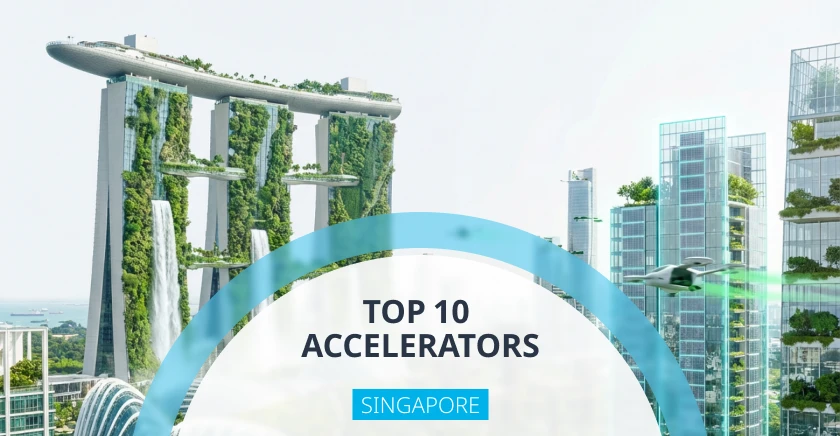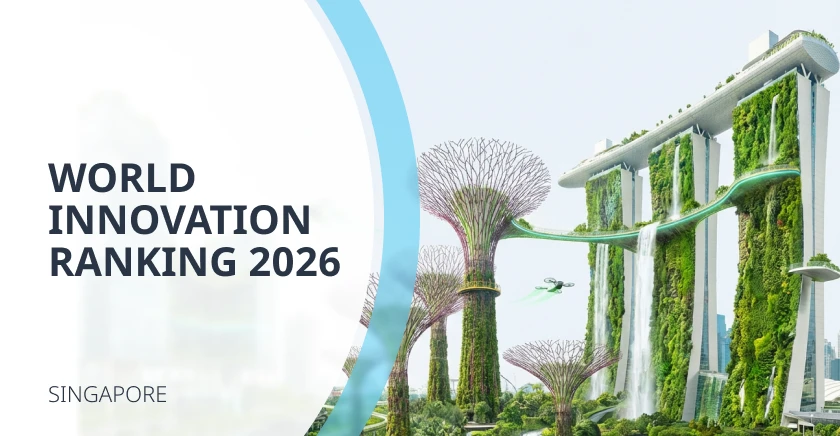
WORLD INNOVATION RANKING 2026: Skyscrapers City-States Roundup by Arch Town Labs
The business card: Singapore in the global economy of 2026
In the volatile and highly fragmented macroeconomic environment of 2026, the definition of global financial capital has profoundly shifted. It has transcended traditional metrics such as banking assets under management, gold reserves, and stock exchange market capitalization. The modern global hub is now measured by its capacity to process cross-border data, attract technological capital, and commercialize intellectual property within a secure regulatory sandbox. Singapore has re-engineered its identity from a shipping and logistics hub to a fully autonomous algorithmic sovereign state operating on the global stage as a highly optimized technology corporation.
The consensus on Singapore's economic standing in 2026 is unambiguous and backed by a dense matrix of global indices. The nation operates as a geopolitical safe haven amidst the escalating technological decoupling between Eastern and Western markets. According to the StartupBlink Innovators Business Environment Index published in 2016, Singapore ranks as the second most business-friendly country globally, recording the highest scores across eight distinct parameters, outperforming nearly every European economy and distancing itself heavily from regional competitors like China and India. More critically, Singapore has overtaken the United States to secure the undisputed top position in the Global Innovation Scorecard, a rigorous ranking predicated on wide-ranging indicators such as workforce education levels and the velocity of new business creation.
Within the highly respected Global Innovation Index evaluations for 2025 and 2026, Singapore consistently maintained its position as the fifth most innovative nation in the world, while retaining absolute leadership within the South East Asian, East Asian and Oceanian high-income groups. Furthermore, the IMD Smart Cities Index for 2014 and subsequent projections ranked Singapore fifth globally, with the IMD World Digital Competitiveness ranking placing it third among 64 global economies in terms of readiness to adopt and use digital technologies for economic transformation.
This economic dominance is not accidental but the result of a compounding growth loop where intellectual property protection, capital inflow, and technological deployment reinforce one another. The digital economy now contributes a staggering 17.7 percent of the national Gross Domestic Product, representing over $84.5 billion in raw economic output. Over the last five years, this digital economy experienced a robust compounded annual growth rate of 11.2 percent, which is nearly double the baseline national GDP growth rate of 5.8 percent. The adoption of digital tools is practically universal across the corporate spectrum, with over 94.6 percent of small and medium enterprises having adopted advanced digital frameworks spanning cloud computing, data analytics, and artificial intelligence.
Singapore captures a disproportionate share of global foreign direct investment by positioning itself as the ultimate neutral ground. It is the only jurisdiction where Chinese autonomous vehicle algorithms, American venture capital, and European sustainability mandates can interoperate seamlessly without friction.
Macroeconomic and innovation indicators 2026:
- Global Innovation Scorecard (Composite): 1st globally, 1st regionally.
- StartupBlink Business Environment Index: 2nd globally, 1st regionally.
- IMD World Digital Competitiveness: 3rd globally, 1st regionally.
- Global Innovation Index: 5th globally, 1st regionally (High-income Asia).
- IMD Smart Cities Index: 5th globally, 1st regionally.
The blue ocean trajectory: Designing uncontested market space
The concept of the Blue Ocean Strategy is woven directly into the geopolitical DNA of Singapore. To survive and thrive as a resource-scarce island nation with a population of roughly 730 square kilometers, Singapore realized decades ago that it could not compete on sheer geographical scale, cheap labor, or domestic market size. Instead, it had to create unique value and uncontested market spaces, making direct competition with megacities like London, New York, and Dubai largely irrelevant. Through state-backed initiatives such as the Value Innovation Action Tank, a coalition of government ministries is actively applying blue ocean principles to national development, driving high growth by pursuing low-cost operational efficiency and high-value differentiation at the same time.
In 2026, this trajectory will be most prominent through Singapore's leadership in crafting digital economy agreements and international interoperability frameworks. Instead of building protectionist walls, Singapore will architect digital bridges between global economies.. The execution of the European Union-Singapore Digital Trade Agreement (EUSDTA), which officially entered into force on February 1, 2026, serves as a prime geopolitical example. This landmark agreement provides absolute legal certainty for cross-border data flows, enabling seamless end-to-end digital trade and protecting businesses from arbitrary data localization laws that plague other regions. Furthermore, Singapore has locked in similar legally binding agreements with the United Kingdom, South Korea, and Chile. By establishing the APEC Cross Border Privacy Rules System and the Nationwide E-Invoicing Network, Singapore has positioned itself as the undisputed master routing node for international digital trade.
Singapore's regulatory approach to artificial intelligence represents another distinct blue ocean maneuver. While jurisdictions like the European Union have opted for strict, monolithic, and highly punitive frameworks like the AI Act, Singapore has implemented a distributed, pro-innovation regulatory model that operates on trust and agility. Governance is distributed across multiple specialized authorities. The Ministry of Digital Development and Information sets the macro national strategy, the Infocomm Media Development Authority develops practical AI tools, the Personal Data Protection Commission handles data rights, and the Monetary Authority of Singapore shapes financial AI expectations. This interlocking ecosystem deliberately avoids stifling early-stage innovation. It allows companies to test generative AI algorithms within a flexible, voluntary model AI governance framework, creating a massive regulatory advantage that aggressively pulls AI startups away from overly restrictive western markets.
At the same time, Singapore is securing its future by focusing on hyper-niche physical domains that other countries have completely ignored, such as deep-sea exploration and ocean mineral processing. In partnership with the International Seabed Authority, Singapore-based entities are actively developing sustainable frameworks and contracts for exploring polymetallic nodules and cobalt-rich ferromanganese crusts. By unlocking future supply chains for critical battery metals in the deep ocean, Singapore hopes to bypass terrestrial mining bottlenecks controlled by rival superpowers. Through ownership of regulatory standards, intellectual property, and international agreements related to this new frontier, Singapore will create a proprietary ecosystem in which it will determine the rules of engagement for the next century's hardware infrastructure.
Technological foundation: The architecture of a smart nation
The physical and digital layers of Singapore have been entirely hybridized by 2026. The city operates on an infrastructure for communication and connectivity that is designed for zero-latency and high-bandwidth applications, both for consumers and heavy industry. The Infocomm Media Development Authority is leading the national rollout of 5G, moving beyond basic consumer broadband and into enterprise applications. 5G innovation grants absorb up to 70% of qualifying costs, de-risking commercial adoption for local businesses, prioritizing complex technologies such as robotics, the Internet of Things and augmented reality.
To ensure these technologies are battle-tested before commercial deployment, the state has established numerous open testbeds. These include the 5G Living Lab at PIXEL, the 5G installation at Sentosa, the Maritime Drone Estate, and the Future Communications Translation Lab at the Singapore Institute of Technology. Telecom leaders are moving at an identical pace. Singtel, in strategic partnership with Ericsson, is currently executing a phased 5G-Advanced roadmap designed to unlock scalable, enterprise-grade network slicing and recurring revenue streams by 2030.
However, the technological horizon of the city has already shifted towards 6G. As a clear signal of its future-oriented infrastructure dominance, Singapore launched a $34 million 6G joint research laboratory in March 2026. This initiative, hosted under the national Future Communications Programme, targets the absolute cutting edge of next-generation networks and seeks to develop satellite-connected non-terrestrial networks, AI-native radio systems, and energy-efficient protocols for telecommunications equipment. By bringing MediaTek's expertise in modem and AI chips into the early stages of 6G system development, Singapore will ensure ownership of core patents and standards for commercial deployment of 6Gs at the end of the decade.
This underlying infrastructure serves as fertile ground for one of the most dense and aggressive startup ecosystems in Asia-Pacific. Singapore has over 47,800 startups and 36 official unicorns, which is an astonishing concentration of billion-dollar companies per capita that rivals Silicon Valley. Globally, Singapore ranks seventh in terms of total unicorn creation, just behind Israel and Germany. The ecosystem is heavily focused on FinTech, consumer apps, and enterprise software, due to the city's role as a wealth hub and logistics hub.
To understand the practical application of this technological foundation, we must examine the apex predators of the Singaporean startup ecosystem. Below is an analysis of five defining local unicorns that capture the exact essence of Singapore's 2026 innovation landscape:
- Airwallex (Valuation: $8.0 Billion | Industry: FinTech): Operating as a borderless financial infrastructure layer, Airwallex bypasses traditional banking complexities. It provides businesses with global accounts, localized payouts, and intelligent spend management tools, drastically reducing the friction and foreign exchange costs of global e-commerce.
- Ninja Van (Valuation: $2.0 Billion | Industry: Logistics Tech): Dominating the chaotic Southeast Asian last-mile delivery market, Ninja Van utilizes proprietary routing algorithms and a dense network of sorting hubs. It provides e-commerce merchants with plug-and-play logistics, transforming unpredictable regional delivery systems into reliable, trackable operations with 24-hour fulfillment capabilities.
- Nium (Valuation: $1.4 Billion | Industry: FinTech / B2B): Nium has built an advanced global payments platform that empowers banks, software platforms, and financial institutions to embed financial services seamlessly. Through a single API, Nium enables instantaneous cross-border payouts and card issuance in over 190 countries, effectively operating as the invisible plumbing for the global digital economy.
- Bolttech (Valuation: $2.1 Billion | Industry: InsurTech): Operating the world's largest technology-enabled insurance exchange, Bolttech connects insurers, distributors, and customers on a single matrix. By offering insurance-as-a-service, it allows non-financial brands to embed protection products seamlessly at the point of sale, completely bypassing legacy insurance distribution models.
- Carousell (Valuation: $1.1 Billion | Industry: Consumer Marketplace): Evolving from a simple classifieds app into a dominant recommerce platform, Carousell utilizes advanced AI for rapid image recognition, automated pricing suggestions, and algorithmic fraud detection. It drives the circular economy across Greater Southeast Asia by making the buying and selling of secondhand goods entirely frictionless.
These companies do not merely operate within the borders of Singapore. They use the city-state as a high-trust, high-bandwidth command center to deploy their platforms across fragmented emerging markets in Southeast Asia, leveraging Singapore's digital trade agreements to scale with unprecedented velocity.
The investment landscape: The new capital of capital
Singapore's transformation into the world's preeminent wealth management hub represents one of the most rapid and dramatic capital migrations in modern financial history. Between 2020 and 2026, the number of single-family offices in the city exploded by over 400%, surpassing 2,000 active offices managing a combined $66.8 billion in assets. This massive influx was driven by a perfect storm of macroeconomic push and pull factors, including geopolitical uncertainties, the sunset of non-domicile tax statuses in the UK, and shifting tech regulations in China. Simultaneously, Singapore attracted this capital through targeted tax incentives, political stability, and regulatory clarity.
Wealthy families from Chinese tech conglomerates, Indonesian industrial empires and European legacy estates are increasingly using Singapore and the United Arab Emirates as part of a highly strategic "barbell" wealth management approach to hedge against global volatility. This immense concentration of sophisticated capital provides the liquidity necessary to fuel deep-tech innovation, while the startup funding ecosystem no longer relies solely on early-stage venture capitalists, but rather on a complex, multi-layered capital stack that can take a founder from an unproven idea to a multi-billion-dollar public offering without leaving the jurisdiction.
The investment landscape is dominated by seven distinct types of active market participants, each playing a crucial role in the innovation lifecycle:
1. Angels and Angel Networks Business angels provide critical first-in risk capital. In 2026, angel investing in Singapore is highly institutionalized through syndicates and hyper-specialized networks. Entities like Spartan Group and HashKey Capital act as deep-pocketed angels and early-stage investors, specifically targeting Web3, blockchain infrastructure, and decentralized finance. CrossFund and AngelCentral pools capital from high-net-worth individuals writing highly agile checks ranging from $200K to $5M, to validate early prototypes and seed rounds.
2. Accelerators and Incubators Accelerators function as the operational bootcamps for the ecosystem. BLOCK71, a pioneering initiative by NUS Enterprise, remains the flagship hub, credited with contributing to nearly 25 percent of the local startup valuation and producing alumni like the unicorn Carousell. Global generators like Antler specialize in matching co-founders and providing day-zero capital. For deep tech and biotechnology, government-backed SGInnovate takes the lead, funding hardware and quantum computing startups that require significantly longer gestation periods than traditional software. Specialized programs like PIER71 focus entirely on maritime tech, bridging startups with maritime corporates via the annual Smart Port Challenge.
3. Family Offices Operating quietly but wielding immense financial power, family offices have shifted from passive real estate investments to direct venture capital allocations. Reports indicate that allocations to private equity and venture capital now routinely reach 10% to 25% for single-family offices. Offices such as DeepSky Capital and Octava directly participate in Series A and Series B rounds, offering founders patient capital that is not restricted by standard ten-year venture fund life cycles. The typical ticket size for these entities ranges between $5 million and $50 million, providing massive leverage for scaling startups.
4. Venture Capital Funds Traditional VC firms serve as growth engines for cities. The landscape is highly competitive, with firms categorized by sector and stage. Jungle Ventures focuses on consumer internet and B2B commerce at multiple stages, building category leaders such as Kredivo and Moglix. BEENEXT targets cross-border software solutions, while global giants such as B Capital Group invest hundreds of millions in late-stage healthcare and climate technology ventures. Gobi Partners heavily focuses on the emerging Islamic digital economy, leveraging Singapore as a launching pad into the wider Muslim world.
5. Corporate Venture Capital Incumbent corporations use their balance sheets to acquire innovations rather than trying to build them internally. Singtel Innov8 is a prime example of this, investing globally in network capabilities, AI, and enterprise software that can be integrated directly into its massive telecom infrastructure. Other major players, like the Unilever Foundry, partner with startups to drive sustainable packaging and supply chain innovations into their corporate ecosystems, providing startups with global scale instantly.
6. Grants and Subsidies The Singaporean government acts as the ultimate non-dilutive co-investor. State-backed initiatives dramatically alter the risk profile for early-stage founders. The 2025 national budget injected $2.2 billion into the National Productivity Fund to boost enterprise innovation, alongside the $111.9 million Enterprise Compute Initiative aimed squarely at subsidizing AI integration for local businesses. Highly targeted programs, such as the AI Accelerate grant, provide up to $1.2 million in non-dilutive capital, paired with massive cloud computing credits. This allows AI startups to survive the initial GPU-intensive training phases that typically drain early-stage treasuries.
7. Technoparks and Innovation Hubs Physical infrastructure is heavily subsidized and structured to cluster specialized talent. Through state developer JTC Corporation and real estate giant CapitaLand, the city develops purpose-built environments. The Singapore Science Park and the newly launched Geneo hub offer wet-lab ready spaces for biotechnology firms. The physical proximity forced by these technoparks creates inevitable knowledge spillover, allowing a hardware robotics founder to cross paths with an AI computer vision specialist at a shared cafeteria, leading to organic commercial synthesis.
Urban environment and sustainability: The green matrix
Innovation in Singapore is not limited to software algorithms or financial engineering. It is physically embedded in the concrete, canopy, and coastline. The existential threat of climate change and rising sea levels for a low-lying island nation has forced Singapore to pioneer urban sustainability decades before it became a global corporate mandate. The city-state is currently executing the Singapore Green Plan 2030, a comprehensive, multi-ministerial roadmap to completely decarbonize the urban environment while simultaneously enhancing the quality of life for its residents.
The tension between extreme urban density and livability is managed through highly aggressive greening policies. As of 2026, Singapore's skyline will be defined by exactly 100 skyscrapers exceeding 150 metres in height, with 34 superstructures piercing the 200-metre mark. This places Singapore among the most densely populated cities in the world, trailing only megahubs like Hong Kong, Shenzhen and New York. Yet, beneath this dense canopy of glass and steel, there is a deliberate attempt to create a city in nature. The Green Plan calls for the development of more than 130 hectare of new parks by 2030, ensuring that every household has access to green space within ten minutes walking distance. To reduce urban heat islands, buildings are encouraged to achieve the Green Mark Platinum Standard for Low Energy Efficiency, with the government aiming for 80% of all buildings to be green by the end of the decade.
The transportation grid is undergoing a radical and forced transition. The state has notoriously frozen the growth of the private vehicle population, pushing the populace toward a mass transit system that aims to achieve a 75 percent peak-period modal share by 2030. Electric buses are rapidly replacing legacy diesel fleets, and the rail network is expanding to 360 kilometers, complemented by 1,300 kilometers of active cycling paths designed for micro-mobility.
But the true manifestation of the city of the future lies in its purpose-built smart districts, which act as massive living laboratories for applied technology and urban planning.
The Punggol Digital District Opening its doors progressively through 2026, the 50-hectare Punggol Digital District represents Singapore's answer to Silicon Valley, but engineered from the ground up for the post-carbon era. The district houses major tech conglomerates, the Cyber Security Agency, and the Singapore Institute of Technology campus, creating a seamless membrane between academia and commercial deployment. What separates Punggol from traditional business parks is its Open Digital Platform. Developed jointly by JTC and GovTech, the Open Digital Platform functions as an operating system for the entire district. It connects every building, environmental sensor, and utility line into a master virtual 3D replica. This allows facility managers to monitor real-time energy consumption, optimize centralized cooling systems, and deploy autonomous robots, like the food delivery robot Bob and the cleaning robot Bill, with perfect logistical precision. The district demonstrates how the internet of things transitions from consumer novelty to macro-urban efficiency.
The Jurong Innovation District In the western corridor, the Jurong Innovation District serves as the bleeding edge of Industry 4.0 and advanced manufacturing. It is a massive 620-hectare advanced manufacturing ecosystem combining research capabilities, technology training providers, and fully automated factories of the future into a single physical continuum. Connectivity to this district will be further enhanced by the upcoming Jurong Region Line, though complex engineering challenges have slightly delayed its first stage completion to mid-2028. To maintain ecological balance amidst this industrial expansion, planners retained over 14.5 hectares of natural forest streams as ecological corridors within the district.
Tuas Mega Port Further west, the Tuas Mega Port is currently executing its massive Phase 2 construction, targeting progressive berthing operationality. By its full completion in the 2040s, Tuas will consolidate all of Singapore's existing port operations into a single automated hub capable of handling 65 million twenty-foot equivalent units annually, which is almost double the volume of the previous legacy terminals combined. Built entirely on reclaimed land utilizing 227 ten-story tall caisson walls, the port relies on automated guided vehicles and algorithmic crane routing. This automation virtually eliminates human presence on the active tarmac while maximizing throughput and minimizing maritime carbon footprints, securing Singapore's status as the apex node of global shipping.
Urban Air Mobility Perhaps the most visible leap into the future is happening in the airspace directly above the city. By 2026, Singapore has moved past theoretical drone deliveries into actual passenger Urban Air Mobility operations. German aerospace manufacturer Volocopter has targeted 2026 for its European Union Aviation Safety Agency certification, paving the way for full commercial air taxi flights by 2027. Currently, Volocopter is partnered with the Agency for Science, Technology and Research to trial electric vertical take-off and landing aircraft for emergency medical services with Vertical Aerospace, drastically cutting response times to remote areas. Looking forward, specialized vertiports known as VoloPorts are slated for construction in Marina South, Sentosa, and Changi, allowing tourists and executives to bypass ground traffic entirely on thirty-minute aerial routes across the city.
Barriers and challenges: The friction of hyper-growth
No ecosystem of this magnitude scales without generating severe structural friction. Despite ranking as a premium destination for global capital and technology, Singapore in 2026 grapples with several acute growth constraints that threaten to throttle its blue ocean trajectory if left unmanaged.
The most persistent and damaging barrier is the severe deficit in specialized technological talent. While Singapore possesses a highly educated and efficient workforce, the explosive demand for niche skill sets, specifically in large language model architecture, quantum computing, cybersecurity, and deep-tech hardware engineering, vastly outpaces domestic supply. Programs like the Singapore Digital Leadership Accelerator attempt to plug these gaps through networking and pipeline building, but relying on imported talent is politically sensitive and increasingly expensive. Furthermore, as sovereign tech capabilities become matters of national security, elite global tech talent is heavily contested by competing hubs in the United States, the Middle East, and China.
Directly correlated to the talent crunch are the crushing cost of living and real estate premiums. Singapore is consistently ranked among the most expensive cities globally. Massive influxes of ultra-wealthy individuals and family offices have driven residential and commercial rents to record highs. While a $1.2 million state grant may sound substantial on paper, its actual financial viability is significantly diminished when considering the burn rate required to secure top-quality office space in technology hubs like One-North or the Central Business District, along with the high salaries required to attract senior developers. This financial pressure inevitably pushes early-stage startups towards cheaper neighboring hubs such as Jakarta or Ho Chi Minh City, leaving Singapore primarily for large-scale deep-tech investments and regional headquarters.
There is also the paradox of regulatory complexity. While Singapore's distributed regulatory framework, governed collectively by the Infocomm Media Development Authority, the Monetary Authority of Singapore, and the Personal Data Protection Commission, prevents rigid stagnation in other markets, it requires enormous administrative bandwidth to navigate. An AI startup developing algorithms for insurance must comply with the Model AI Framework, financial stability regulations, and strict personal data boundaries at the same time. For early-stage companies without dedicated compliance officers, this multi-agency matrix can be a subtle but persistent obstacle to rapid deployment and product iteration.
Finally, extreme land scarcity forces incredibly difficult ecological compromises. The expansion of the Jurong Innovation District, specifically the CleanTech Park, necessitated the clearance of over 52 hectars of secondary forest and rare stream habitats. This development impacted endangered species like the Sunda pangolin and harlequin butterfly. The city is caught in a constant high-stakes balancing act between expanding its physical infrastructure to support advanced manufacturing and upholding its highly publicized sustainability mandates for the City in Nature.
City of the future: Cast your vote
As Singapore continues to architect the blueprint for the post-oil, sovereign intelligence capital of the 21st century, its dominance is clearly weighted toward sectors that require high regulatory trust, intensive capital aggregation, and deep technological integration. When evaluating the primary drivers of this ecosystem for the overall global Innovation Rating, several key vectors stand out above the rest.