WORLD INNOVATION RANKING 2026: Skyscrapers City-States Roundup by Arch Town Labs
The 2026 calling card: Seoul as the post industrial intelligence hub
In the complex geopolitical and macroeconomic landscape of 2026, Seoul has aggressively completed its transition from a twentieth century hardware manufacturing powerhouse to a multifaceted post-industrial intelligence and global financial capital. The city now occupies a highly critical node in the global digital economy, balancing the relentless expansion of artificial intelligence infrastructure with sweeping regulatory frameworks designed to institutionalize digital assets, cross-border venture capital, and sovereign technology. South Korea is currently navigating a highly volatile macroeconomic environment driven by global AI transformation and green transformation initiatives.. Despite external pressures, the nation aims to achieve a gross domestic product growth rate of 1.9 percent by 2026, narrowing its negative output gap and maintaining an impressive current account surplus of 6.1 percent, driven largely by strong semiconductor exports during the global artificial intelligence boom. Seoul acts as the central nervous system of this nationwide pivot, coordinating a massive redistribution of capital, policy support and elite engineering talent towards emerging deep tech ecosystems.
The sheer scale and global ambition of Seoul's integration into the worldwide innovation economy was clearly demonstrated at the 2026 Consumer Electronics Show in Las Vegas. The South Korean delegation brought exactly 470 different startups, representing the largest and most strategically coordinated venture deployment ever by a single country in the history of the event. The results were unprecedented. Korean companies won 206 innovation awards in 35 different categories. Crucially, 150 of these awards were awarded to small and medium-sized enterprises, and venture and startup companies received 144 awards in total. This performance highlights the structural and cultural transformation away from the traditional narrative of chaebols that has dominated Korean industry for decades, as Seoul is no longer dependent on giant conglomerates such as Samsung or LG for its technological reputation.. Instead, it has actively cultivated a decentralized, highly agile startup ecosystem capable of capturing top global honors, including Best of Innovation awards won by local vanguard firms such as DeepFusion AI, CT5, and Geeks Loft.
This sweeping transformation is underpinned by a deliberate strategic shift from merely technological exhibition to rigorous institutional implementation. The Seoul Metropolitan Government, working in close collaboration with national ministries such as the Ministry of Small and Medium Enterprises and Startups, has leveraged its technological expertise to attract significant foreign direct investment and seamlessly integrate local clusters with global capital markets. Through linking Seoul's substantial financial and administrative resources with regional innovation hubs in cities such as Daegu, Daejeon and Cheonan, the government actively addresses domestic geographic disparities while projecting an integrated, powerful technological presence internationally.
Furthermore, the city and its corporate titans are heavily investing in the physical convergence of digital ambitions with tangible industrial output. This is perfectly exemplified by the massive $9 trillion Korean won commitment spearheaded by Hyundai Motor Group to develop a cutting-edge robotics, hydrogen energy, and artificial intelligence industrial complex in the broader regional network starting in 2026. This specific strategic investment is expected to generate an economic ripple effect of $16 trillion Korean won and create approximately 71,000 high-tech jobs, pushing the boundaries of what a smart industrial ecosystem can achieve. Today, Seoul is defined by this precise synthesis of aggressive state-backed funding, world-class digital infrastructure, and a relentless drive to secure absolute sovereign technological independence in an era defined by global supply chain volatility and rising economic nationalism.
Blue ocean trajectory: Escaping the red oceans of consumer tech
To properly understand the unique value creation engine of Seoul in 2026, one must deeply examine its departure from the hyper-competitive red oceans of consumer software and platform economies. Instead of engaging in a zero-sum, highly saturated battle with Silicon Valley or Shenzhen over consumer applications and social media, Seoul has mapped out a sophisticated blue ocean strategy. This strategy is anchored in market leadership, regulatory innovation, and seamless fusion of digital and physical ecosystems. The city has made traditional competition irrelevant by creating new market spaces blending institutional finance, technology, and telecommunications.
A primary and highly lucrative vector of this blue ocean strategy is the aggressive internationalization and tokenization of round-the-clock global financial markets. Blue Ocean Technologies, leveraging its advanced Seoul office and deep regional relationships, successfully established an alternative trading system that dominates overnight trading volume for US equities in Asia Pacific. Prior to capacity upgrades, the platform handled 30 million shares per night, but now it processes between 125 and 130 million per night, capturing 90% of the regional volume.
The strategic horizon extends much further. By the second quarter of 2026, this infrastructure will officially begin trading tokenized securities governed by the National Market System, effectively creating a decentralized 24-hour liquidity loop for global assets. This revolutionary framework allows global institutional investors to continuously manage geopolitical and macroeconomic risks over weekends and holidays, completely bypassing the rigid limitations of traditional Western trading hours. Anchoring this high-frequency blockchain-enabled financial architecture in Seoul creates an impenetrable competitive moat, which neither traditional Western financial capital nor emerging, loosely regulated crypto havens can easily replicate.
Simultaneously, Seoul-based technological innovators are unlocking multi-billion dollar blue oceans in global connectivity and the Internet of Things. Companies like uCloudlink are utilizing highly proprietary artificial intelligence algorithms and CloudSIM technology to completely eliminate cross-border roaming friction. This bold approach allows global partners to scale networks with zero localized infrastructure costs. This technology transforms isolated IoT silos into a seamless global web, capturing untapped profits in massive legacy markets, such as 4 billion smartphones still heavily relying on physical SIMs through innovations like eSIM Trio. Furthermore, these unique advantages are creatively applied to highly lucrative and unconventional sectors.. A prime example is the $320 billion global pet market, where companies based in Seoul are creating digital ecosystems such as Petpogo, which completely transcend traditional hardware models centered on humans, merging empathetic design with advanced connectivity.
Seoul is also actively using national regulatory frameworks as a powerful competitive blue ocean tool. The comprehensive implementation of the Digital Asset Basic Act in 2026 will establish a multi-layered, formal legal framework for virtual assets, stablecoins and market operators. While other prominent global financial centres continue to struggle with regulatory uncertainty and enforcement by regulation, Seoul explicitly offers institutional investors a highly predictable government-sanctioned environment for digital finance.. The Financial Services Commission has empowered alliances, such as the Digital Asset Exchange Alliance, to create a sophisticated regulatory system that leverages technical knowledge while maintaining strict government accountability. By brilliantly combining the technological supremacy of artificial intelligence and deep technology with unique, forward-looking financial regulations, Seoul is creating a distinct ecosystem in which global capital can safely invest in next-generation assets without the friction typically associated with legacy financial centers.
Technological foundation: The infrastructure of physical and sovereign intelligence
Seoul’s technological foundation in 2026 is no longer defined merely by high internet penetration rates or mobile download speeds. Instead, it is characterized by the massive deployment of sovereign artificial intelligence and the complete architectural reset of its national telecommunications infrastructure. The city’s digital backbone is being engineered from the ground up to support a post screen economy, a reality where advanced computing operates autonomously and invisibly within the physical urban environment.
The aggressive shift towards 6G networks perfectly exemplifies this evolution. Local telecommunications giants are treating 6G not as a simple, sequential speed upgrade, but as a completely intelligent infrastructure designed specifically for the AI era. KT is developing an AI-native network that seamlessly integrates traditional ground-based mobile nodes with advanced satellite links. This integration is designed to provide resilient, uninterrupted coverage across approximately 90% of South Korea's total landmass, which is absolutely critical for enabling autonomous logistics, drone delivery, and emergency response.
This 6G network is highly optimized for unprecedented traffic efficiency. Through the use of advanced object recognition algorithms and neural network based models, the system transmits only key object data rather than full bandwidth video streams, successfully reducing uplink bandwidth usage by more than 50 percent. This creates the necessary ultra low latency environment for Physical AI, where platforms, edge computing systems, and physical robots operate as a single, cohesive ecosystem from the initial digital order straight through to physical execution.
On the sheer computational front, Seoul is rapidly expanding its sovereign capabilities to avoid reliance on foreign technology monopolies. SK Telecom is actively constructing hyperscale artificial intelligence data centers across the country with a target capacity exceeding 1 gigawatt, heavily aiming to position the region as the absolute premier data hub of the entire Asian continent. This massive infrastructure supports a staggering sovereign foundation model boasting 519 billion parameters. This model enables integrated, predictive artificial intelligence agents that efficiently manage everything from complex corporate billing systems to retail customer interactions and personalized telecommunications services.
The city is also physically manifesting this technological dominance through the development of the Seoul AI Tech City, located within the Yangjae Innovation District. Slated for rapid construction, this high-tech hub will house domestic and international graduate schools, leading global research institutes, and a meticulously designed mix of cultural and residential spaces specifically tailored to foster relentless artificial intelligence innovation.
Despite these massive infrastructural leaps, prominent researchers and market analysts caution against looming structural imbalances. A deep tech ecosystem analysis released by Reddal indicates that investment flows and talent acquisition remain heavily over concentrated in artificial intelligence and system semiconductors. This intense hyper focus severely risks starving long cycle global deep tech domains, such as advanced nuclear energy and quantum computing, of sustained research and development continuity. Overcoming this specific investment bottleneck will be absolutely essential for Seoul to maintain its foundational diversity and long term resilience.
To clearly illustrate the incredible commercial maturity built upon this vast infrastructure, the following five local unicorns represent Seoul’s highly unique technological output in the 2026 landscape:
- Rebellions (Artificial Intelligence, $457.7 Million Raised): Operating in the highly competitive semiconductor space, Rebellions designs specialized artificial intelligence chips and neural processing units. The company provides the foundational hardware required for high speed, energy efficient inference, directly challenging legacy silicon giants by optimizing chips for specific financial and cloud workloads.
- Megazone Cloud (Cloud Computing, $672.9 Million Raised): A premier cloud management and migration platform acting as the vital bridge for traditional enterprises transitioning into the digital economy. It manages highly complex multi cloud environments and enables the rapid scaling of digital infrastructure across the Asia Pacific region.
- Toss (Financial Technology, $7.4 Billion Estimated Valuation): South Korea's absolute dominant financial technology super app. Toss has entirely re architected the consumer financial experience, consolidating traditional banking, retail stock trading, credit scoring, and peer to peer payments into a single, frictionless digital environment, driving the city toward a fully cashless society.
- Kurly (FoodTech & Logistics, $3.3 Billion Valuation): A revolutionary pioneer in the grocery supply chain utilizing a predictive artificial intelligence driven dawn delivery model. By leveraging deep learning to forecast consumer demand and manage highly complex cold chain logistics, Kurly ensures hyper fresh product delivery, fundamentally altering urban consumption habits.
- Musinsa (E-Commerce & Retail, Multi Billion Valuation): A powerhouse in the digital retail sector leveraging sophisticated data analytics and community driven commerce. Musinsa utilizes artificial intelligence to track micro trends in urban streetwear, seamlessly matching niche fashion brands with high intent consumers, maintaining a near monopoly on youth fashion distribution.
Investment landscape: Navigating massive capital velocity and structural friction
The venture investment ecosystem in Seoul is defined by immense volumes of deployed capital and a highly structured, aggressively government supported growth ladder. However, this financial landscape is also undergoing a profound transformation as it attempts to shift from traditional consumer software and e-commerce investments toward highly capital intensive deep tech and artificial intelligence ventures. The city boasts an incredibly deep bench of seasoned venture capitalists, high net worth angel investors, and sprawling corporate innovation arms, firmly establishing it as one of the most dynamic and liquid funding environments in the global market.
A foundational cornerstone of this environment is the aggressive deployment of public capital specifically designed to crowd in private investment. The Ministry of SMEs and Startups has officially allocated a record breaking 3.46 trillion Korean won budget for comprehensive ecosystem funding in 2026. This massive allocation includes a dedicated 800 billion Korean won Deep Tech Startup Package strictly targeting artificial intelligence, robotics, biotechnology, and clean technology. Additionally, the state backed Fund of Funds committee is projected to mobilize an astonishing 3.6 trillion Korean won in total venture capital capacity, drastically expanding the liquidity available for emerging tech firms and providing a massive safety net for high risk research.
To directly address the historical cultural and financial stigma associated with startup bankruptcy in Asian markets, the government has uniquely launched a targeted 200 billion Korean won Re Challenge Fund. This fund provides vital catalytic capital to repeat entrepreneurs, attempting to ease the structural friction that often prevents experienced, albeit previously unsuccessful, founders from re entering the market and utilizing their hard earned operational experience.
The institutional asset owner landscape is also evolving at a breakneck pace. South Korean family offices are increasing rapidly in financial sophistication, largely driven by massive wealth generated from the technology and gaming sectors over the past decade. These entities are aggressively shifting their asset allocations toward global private markets, venture capital, and digital assets. These multi family and single family offices are acting as crucial limited partners for both domestic and international venture funds, significantly driving cross border capital flows into and out of Seoul.
Concurrently, the Seoul government is aggressively pursuing foreign capital through highly enhanced tax incentives. The city is offering up to a staggering 75 percent cash grant limit for foreign direct investment explicitly focused on national high tech strategic technologies. Furthermore, the National Tax Service has implemented policies to defer regular corporate tax audits for up to two years for foreign firms that significantly boost their domestic investments, creating an incredibly welcoming environment for international capital.
Despite the overwhelming abundance of capital, the ecosystem faces distinct, highly entrenched bottlenecks. Financial analysts note that while there is absolutely no shortage of early stage seed funding, the crucial handoff between public government grants and private growth equity remains highly disjointed. Furthermore, rigid commercial credit evaluation practices and incredibly strict bank guarantee thresholds continue to act as severe filters, creating structural hurdles for founders attempting to scale rapidly. The investment landscape is thus a fascinating duality of massive state sponsored liquidity battling against lingering conservative risk assessment models.
The active capital pipeline in Seoul is driven by a highly diverse array of institutional and private actors. The following outlines the most active types of investors currently shaping the city's 2026 innovation economy:
- Angels: Prominent entities include Shin Hyun Sung, Naval Ravikant, and Jung-hee Ryu. They provide high velocity seed capital and vital cross border networking, particularly bridging the lucrative Seoul and Silicon Valley ecosystems. They focus heavily on founders with global expansion potential from day one.
- Accelerators: Prominent entities include SparkLabs Seoul, Naver D2 Startup Factory, and Hanwha Dream Plus. They operate intensive three to six month programs offering initial funding, deep technical mentorship, and direct, highly valuable integration into corporate supply chains and massive cloud infrastructure networks.
- Family Offices: Prominent entities include NXC Corporation ($8B AUM) and Topor & Co. Korea (TCK). They deploy long term, patient capital into global private equity, venture funds, and digital assets. They are actively moving immense wealth from legacy chaebols and gaming empires into highly diversified, futuristic tech portfolios.
- VC Funds: Prominent entities include SBVA, BonAngels Venture Partners, and Capstone Partners. Dominating the crucial early to late stage equity rounds, these powerhouse firms manage incredibly extensive portfolios and drive the massive capitalization of local unicorns in SaaS, FinTech, and emerging deep tech sectors.38
- Corporate VC: Prominent entities include Kakao Ventures, SoftBank Ventures Asia, and Lotte Ventures. Operating as heavily funded independent subsidiaries or direct investment arms of massive conglomerates, they secure strategic technological acquisitions and aggressively drive corporate digital transformation across legacy industries.
- Grants & Subsidies: Prominent programs include the Deep Tech Startup Package (800B KRW), SME Growth Ladder (1.2T KRW), and Re Challenge Fund (200B KRW). They provide vital state backed non dilutive capital and low interest policy finance designed to completely absorb the high R&D risks in sectors like robotics and AI, while explicitly supporting repeat founders.
- Technoparks: Prominent hubs include Seoul AI Tech City (Yangjae), Seoul Fintech Lab, and Gangwon Technopark. They serve as massive physical hubs providing heavily subsidized office space, regulatory sandboxes, and direct access to municipal data sets to foster intense geographic clustering of highly specialized startups.
Urban environment and sustainability: The metrics of a vertical green metropolis
The architectural and environmental philosophy of Seoul in 2026 represents a highly deliberate, carefully managed tension between hyper dense vertical expansion and an aggressive, uncompromising mandate for ecological sustainability. As a city severely constrained by its mountainous topography, Seoul has historically been forced to build upward. Today, South Korea boasts an incredibly massive portfolio of high rise architecture, and the capital city itself contains exactly 126 skyscrapers that exceed 150 meters in height, alongside 580 buildings taller than 100 meters, and 24 super structures exceeding 200 meters.
This breathtaking vertical forest of steel and glass is magnificently crowned by the Lotte World Tower, a global engineering marvel scaling 555 meters and comprising 123 floors, making it the tallest building in the nation and the sixth tallest building in the entire world. The skyline represents a continuous timeline of economic triumph, originating from the historic 63 Building completed in 1985, which at 249 meters was once the tallest building outside North America. To provide a clear view of the city's incredible vertical density, here are the tallest structures dominating the South Korean skyline:
- Lotte World Tower: Located in Seoul and completed in 2017. It stands at a massive height of 554.5 meters with 123 floors.
- Haeundae LCT The Sharp Landmark Tower: Located in Busan and completed in 2019. It reaches a height of 411.6 meters with 101 floors.
- Haeundae LCT The Sharp Tower A: Located in Busan and completed in 2019. It stands at 339.1 meters tall with 85 floors.
- Haeundae LCT The Sharp Tower B: Located in Busan and completed in 2019. It reaches a height of 333.1 meters with 85 floors.
- Parc 1 Tower A: Located in Seoul and completed in 2020. It stands at 332.7 meters with 69 floors.
However, this immense vertical density is actively and aggressively counterbalanced by the Seoul Transport Vision 2030 and a highly comprehensive climate action plan aimed strictly at carbon neutrality. The city has initiated a profound mobility paradigm shift, deliberately moving away from private vehicle reliance toward a people centric system focused exclusively on public transport, pedestrians, and cyclists. To efficiently manage the immense logistical challenge of moving millions of citizens daily, the Seoul Metropolitan Government utilizes the highly advanced Transport Operation and Information Service. This integrated traffic center leverages real time data from vast CCTV networks, the Bus Management System, and digital transport cards to optimize traffic flow instantly and communicate directly with the public via mobile and electronic infrastructure.
Innovation in urban transit extends directly into the realm of autonomous mobility. Since its initial public testing phases, Seoul has deeply integrated artificial intelligence powered public transport into its daily municipal operations. Autonomous self driving buses are now fully incorporated into the public transit network, operating with high frequency across key historical and commercial districts, serving both as highly functional transit and as a live, interactive showcase of the city's technological commercialization capabilities.48 This is fully supported by an unparalleled municipal digital infrastructure, including exactly 21,426 public Wi-Fi access points that guarantee free and ubiquitous connectivity, drastically reducing the digital divide and enabling real time civic applications.
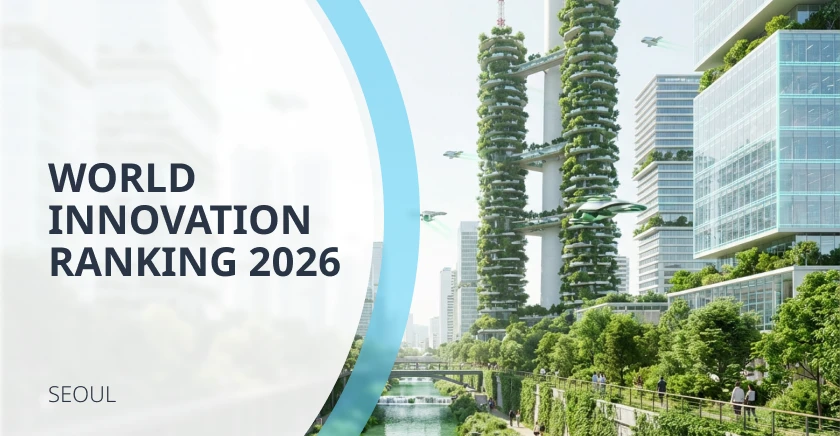
Environmental restoration projects serve as the vital lungs of this digital metropolis. The continued expansion and meticulous maintenance of projects like the Cheonggyecheon stream restoration highlight the city's absolute commitment to mitigating the severe urban heat island effect. Brilliantly replacing an aging, heavily polluting elevated highway with a pedestrian-focused waterway and an extensive park system has reduced local temperatures in a specific corridor by 1.3 degrees Celsius compared to the city average, while significantly lowering local concentrations of volatile organic compounds and dangerous fine particulate matter.
The city's urban environment in 2026 is an ongoing, highly successful experiment in smart city dynamics. It seamlessly merges Open Data and Big Data Campuses, which currently provide over 7,392 highly curated datasets to civic developers, generating over 17.5 billion data views.
The city aims to achieve 35% solar battery efficiency by 2030 and pioneers hydrogen reduction iron and steel technologies. The final result is a breathtaking environment, where the physical construction of over a hundred massive skyscrapers is perfectly offset by algorithmic traffic management, autonomous electric transit, and lush urban green corridors. This creates a definitive blueprint for the sustainable mega city of the future.
Barriers and challenges: Regulatory turbulence and the talent deficit
Despite its formidable physical infrastructure and massive capital reserves, the steep trajectory of Seoul as a premier global innovation capital is severely constrained by a highly complex matrix of regulatory, demographic, and economic barriers. The rapid speed of technological advancement in the region often outpaces the ability of its legislative frameworks to adapt and the rigidity of its labor markets, leading to immense structural friction that limits optimal scaling of the venture ecosystem.
The national regulatory environment presents a highly complex double-edged sword for innovators. The strict enforcement of the Digital Asset Basic Act in 2026 is a prime example of this dynamic. While sweeping legislation successfully provides much-needed legal clarity and fully institutionalizes the digital asset market, it also introduces draconian structural controls. Most notably, the mandate forcefully requires the founders of major cryptocurrency exchanges to adhere to a strict ownership cap of 15-20%. This forced divestment seriously threatens management stability and conflicts directly with the traditional venture capital model that relies heavily on founder control to drive rapid iteration and aggressive market expansion.
Furthermore, the lingering legacy of retroactive public goods labeling, famously known in the industry as the "Tada precedent," where highly popular ride-sharing services were essentially legislated out of existence overnight, has left a massive trust deficit between Web3 innovators and government regulators. Innovative startups face an exceptionally high cost of regulatory entry, a system that inherently favors heavily capitalized, established banks and legacy exchanges over agile, disruptive technology firms.
Economically, the soaring cost of living and the severe rigidity of the labor market are creating a massive, highly critical talent bottleneck. South Korea's entrenched dual structure of the labor market highly protects incumbent corporate workers while simultaneously marginalizing new, younger entrants. Consequently, the average time taken for highly educated young professionals to secure their first job has increased to an astonishing 22.7 months. This has drastically increased the number of voluntarily unemployed, pushing nearly 40% of the youth demographic into low-paying temporary jobs.
This prolonged youth unemployment, coupled with exorbitant housing costs in the capital, reduces lifetime wage trajectories and completely stifles asset accumulation. It acts as a massive depressant on the national birth rate, and for the booming innovation sector it translates to a critical deficit of highly skilled engineering and executive talent. The city's ambition to train 10,000 artificial intelligence professionals through universities and the Seoul Software Academy is a policy response to the escalating human capital crisis, although it is delayed.
Finally, the highly volatile geopolitical macro-environment continuously threatens the nation’s heavily export-driven economy. With the rapid reshaping of global value chains, aggressive technological catch-up from neighboring manufacturing superpowers like China, and unpredictable shifting tariff policies from the United States, Seoul's foundational hardware and semiconductor sectors remain highly vulnerable to sudden external shocks. While the government is actively attempting a fundamental transformation of the overall growth paradigm in order to revive potential growth and address deep societal polarization, a dangerous combination of regulatory overreach, skyrocketing urban living costs, and a rapidly aging workforce poses a formidable existential barrier to maintaining the country's lucrative blue-ocean momentum in the coming decades.
The future horizon
To accurately determine how Seoul ultimately ranks as the undisputed financial and innovation capital of the future, industry observers and market participants must critically evaluate the core sectors driving its complex ecosystem. Based on the exhaustive 2026 data analysis detailing investment flows, regulatory frameworks, and technological breakthroughs, the following industries exhibit the absolute highest concentration of future potential.