WORLD INNOVATION RANKING 2026: Skyscrapers City-States Roundup by Arch Town Labs
The calling card of a new financial center
Kuala Lumpur in 2026 has rewritten its economic narrative, shifting from a traditional Southeast Asian manufacturing and services hub into a premier global destination for venture capital, sovereign wealth, and frontier technology. The visual manifestation of this metamorphosis is immediately apparent in its transforming skyline and urban density, but the true structural shift lies in its macroeconomic repositioning. The Malaysian capital has managed a transition from being a consumer of imported technology to a net creator of high value intellectual property.
This evolution is quantifiable. By the end of 2025 and moving into 2026, Kuala Lumpur secured the 86th spot in the Global Innovation Index, jumping significantly from its previous rankings, while the Malaysian government set an aggressive target to push the nation into the top 30 global innovative economies. At the same time,, the city climbed to the 45th position in the Global Financial Centres Index, bypassing several established regional competitors and signaling a renewed wave of investor confidence. This upward trajectory is anchored by the Tun Razak Exchange, Malaysia's purpose built International Financial Centre. Spanning 70 acres with a gross development value of RM40 billion, this district has become the clear heart of global capital in the city.
The Tun Razak Exchange operates as the central nervous system for Kuala Lumpur's 2026 financial ambitions. Guided by five core pillars encompassing world class infrastructure, talent pipelines, and a catalytic business environment, the district currently hosts over 120 international and local firms, employing more than 20,000 professionals. Key assets within the district, such as the Exchange 106, Menara Prudential, Menara IQ, and Menara Affin, have collectively driven an 80 percent occupancy rate across net lettable areas, while absorbing over 2.6 million square feet of office space since 2022. The overarching economic backdrop supporting this localized boom is highly resilient. Malaysia recorded a historic high of RM378.5 billion in approved investments recently, representing massive year on year growth and generating hundreds of thousands of high value jobs.
At the core of this transformation is the KL20 Action Plan. Launched to propel Kuala Lumpur into the ranks of the top 20 global startup hubs by 2030, the initiative is a example in state driven economic engineering. The plan integrates the efforts of the Ministry of Economy, the Ministry of Science, Technology and Innovation, and the Ministry of Finance to streamline regulatory approvals, attract venture capital, and embed artificial intelligence into the national economy. Through the MYStartup Single Window portal alone, the city has successfully registered over 4,400 active startups, processing tens of thousands of applications for various state backed incentives. Kuala Lumpur in 2026 is no longer competing on the basis of cheap labor or raw material exports. It is competing on regulatory agility, sovereign backed venture deployment, and specialized technological niches.
The blue ocean trajectory: Escaping the regional dogfight
Instead of engaging in a zero sum, highly saturated competition with traditional financial heavyweights for generic banking operations or low margin consumer software, Kuala Lumpur has charted a definitive and aggressive blue ocean strategy. The city is creating unique value by monopolizing specific, emerging niches where regional competitors are either structurally limited, prohibitively expensive, or geopolitically constrained. This strategy unfolds across three massive, state managed domains: advanced semiconductor design, the global Islamic digital economy, and zero tax family office zones.
The most aggressive and consequential play is the National Semiconductor Strategy. Backed by a RM25 billion fiscal allocation, Malaysia is executing a massive, deliberate shift up the global value chain. For decades, the country dominated the backend outsourced semiconductor assembly and test sector, capturing lower margin segments of the market. Now, Kuala Lumpur and its surrounding technology parks are moving into front end integrated circuit design, advanced packaging, and sophisticated manufacturing equipment. This is not merely a policy statement. The establishment of the Malaysia Semiconductor IC Design Park provides notable, tangible incentives to fabless firms and hardware startups. Companies operating within this ecosystem gain access to up to 100 percent subsidies for using essential electronic design automation tools, highly subsidized multi project wafer services, and modern testing infrastructure.
Additionally,, the National Semiconductor Strategy introduces the MYChipStart Programme to support early stage design startups, alongside deep tax incentives including the Pioneer Status, which offers a 70 percent income tax exemption for up to ten years, and an Investment Tax Allowance covering 60 percent of qualifying capital expenditures. By targeting the intellectual property layer of the hardware stack, Kuala Lumpur isolates itself from low cost manufacturing rivals while offering global tech firms an alternative to contested East Asian chip hubs that are currently navigating complex geopolitical export controls.
At the same time,, Kuala Lumpur is using its clear, historical leadership in the global Islamic economy. The city is not merely resting on its laurels as a hub for traditional Islamic banking. Instead, it is pioneering the integration of Islamic social finance with modern digital infrastructure. The regulatory framework, managed via the Malaysia International Islamic Finance Centre, has expanded to include comprehensive data repositories for zakat and waqf, while issuing enhanced guidelines for Sustainable and Responsible Investment sukuk grants. The 2026 economic roadmap explicitly expands eligible financial instruments to include sukuk and bonds that conform to the ASEAN Taxonomy for Sustainable Finance, effectively merging Islamic finance with the global green transition. This creates a unique asset class that adheres to environmental, social, and governance principles by default, attracting a massive pool of ethical capital that traditional western financial centers struggle to service authentically.
The third pillar of Kuala Lumpur's blue ocean trajectory is the integration of the Forest City Special Financial Zone into the broader wealth management network of the capital. This initiative represents a smart move in capturing ultra high net worth individuals and global family offices. The zone offers a first of its kind Single Family Office scheme featuring a zero percent tax rate on chargeable income for an initial ten years, with the option to extend for another ten years. Coordinated closely by the Securities Commission Malaysia, the scheme requires these offices to maintain a minimum of RM30 million in local investments and incur specific annual operating expenditures.
The market response has been immediate and overwhelming. By early 2026, the Securities Commission had already granted conditional approvals to multiple international families, targeting an initial RM2 billion in assets under management, with expressions of interest flooding in from Taiwan, Oman, and beyond. This specialized wealth management corridor allows Kuala Lumpur to capture substantial private wealth migrating from turbulent regions, offering absolute policy certainty, a strong common law framework, a competitive cost of living, and proximity to the explosive growth markets of Southeast Asia.
Technological foundation and digital infrastructure
The digital bedrock of Kuala Lumpur in 2026 is defined by an uncompromising push toward artificial intelligence integration, next generation telecommunications, and hyperscale cloud infrastructure. The city's technological posture is heavily guided by the Malaysia Digital Economy plan, widely known as MyDIGITAL, which was structured in three phases aiming to position the nation as a regional leader by 2030. Having successfully completed its foundational and inclusive transformation phases, the 2026 to 2030 phase is intensely focused on positioning Kuala Lumpur as a regional hub for digital content, cybersecurity, and advanced enterprise solutions.
While 5G cellular connection infrastructure has saturated the major urban corridors, Kuala Lumpur is already laying the architectural groundwork for 6G. Following the momentum of the Mobile World Congress 2026, where global telecom giants finalized the trajectory for 6G commercialization, local infrastructure is being positioned as a primary testbed for artificial intelligence native networks. Key collaborations between industry leaders like Ericsson and Intel are transitioning 6G from theoretical research into a deployable commercial ecosystem. Local telecommunications frameworks are being upgraded to support cloud native radio access networks powered by advanced processors, enabling real time artificial intelligence inference at the network edge. This ensures that future networks will not merely transmit data faster, but will use machine learning to optimize spectral efficiency and energy consumption natively.
This extreme connectivity supports an expansive internet of things ecosystem, which directly powers the city's sophisticated digital twin projects. These virtual replicas of Kuala Lumpur combine real time sensor data, historical analytics, and 5G network infrastructure to optimize traffic management, monitor new urban developments, and simulate disaster response scenarios. The integration of these advanced data platforms provides city planners and private developers with unparalleled visibility into urban mechanics, driving highly efficient infrastructure upgrades and sustainable resource allocation.
This strong digital infrastructure has birthed a competitive and resilient startup ecosystem. Despite global venture capital corrections, the city continues to produce market defining companies. The Malaysian government's target of creating extensive unicorn and soonicorn ecosystems is yielding tangible results.
Below is a detailed analysis of five critical local technology giants anchoring the local tech scene in 2026:
- Carsome: Operating in Automotive E-Commerce and holding Unicorn status. Serving as Southeast Asia's largest integrated car e-commerce platform. Carsome has entirely digitized the fragmented used car market through proprietary artificial intelligence driven pricing algorithms, rigorous inspection data pipelines, and end to end logistics solutions. The platform holds auctions for dealers and manages direct consumer deliveries, heavily backed by tier one investors including MediaTek and the Qatar Investment Authority.
- Edotco: Focused on Telecommunications Infrastructure and recognized as a Unicorn. Operating as a premier regional tower company providing end to end telecommunications infrastructure. They drive the physical rollout of 5G and prepare the structural baseline for early 6G networks. Their business model specializes in co-locations, built to suit towers, and advanced energy efficient operations across multiple emerging markets.
- Aerodyne: Specializing in Drone Technology and AI with Soonicorn status. Positioned as a global leader in Drone as a Service solutions. Aerodyne uses sophisticated, proprietary artificial intelligence analytics software to process drone captured data for critical infrastructure inspection, precision agriculture, and autonomous facility management. Their nested drones operate autonomously for data download and recharging, serving enterprise clients globally.
- Boost: Working in Financial Technology and recognized as a Soonicorn. Rapidly evolving from a standard digital e-wallet into a full spectrum digital bank and micro financing platform. Boost provides critical alternative credit scoring, merchant solutions, and working capital for unbanked regional micro, small, and medium enterprises, pushing toward a multi billion dollar valuation target.
- AirAsia MOVE: Focused on Travel Tech and Super App functionality with Soonicorn status. The digital super app arm of Capital A. It uses an substantial historical aviation customer database to offer integrated ride hailing, food delivery, hotel bookings, and cross border digital payment services, effectively dominating the regional travel tech environment.
Investment environment and venture dynamics
The venture capital and investment ecosystem in Kuala Lumpur has matured exponentially by 2026. The previous eras of highly speculative, early stage cash burns have been firmly replaced by a disciplined, heavily structured investment environment. Investors are demanding sharper clarity, proven traction, and rigorous path to profitability metrics from founders. The Malaysian state plays a massive and notable catalytic role in this environment, crowding in private capital through sophisticated sovereign wealth fund initiatives and co-investment frameworks.
The KL20 Action Plan operates as the central financial routing system for this investment environment. Through this initiative, sovereign entities including Khazanah Nasional, Kumpulan Wang Persaraan, and BlueChip Venture Capital have established a massive RM3 billion fund of funds. This capital is specifically earmarked to invest in promising early stage startups, subsidize first time local fund managers, and attract elite global venture capital firms to establish a physical presence in Kuala Lumpur.
To fully map the flow of capital within the city, it is necessary to analyze the exact mechanisms of the seven distinct investor types driving the Kuala Lumpur innovation ecosystem in 2026.
1. Angel investors
High net worth individuals and specialized syndicates provide the critical first layer of pre-seed liquidity for early stage founders. In Kuala Lumpur, networks such as the Eleet Angel Investor Club operate to bridge the gap between technical founders and early operational capital. These angels are increasingly focused on B2B enterprise software and green technology, favoring founders who demonstrate deep sector expertise over consumer application developers.
2. Accelerators
Accelerators serve as the essential engines for deal flow generation, preparing startups for institutional scrutiny. Kuala Lumpur boasts several world class programs. 1337 Ventures operates the highly regarded Alpha Startups pre-accelerator, pushing founders through intensive validation processes. Global operators like Antler run in-person residency programs in the city, acting as a catalyst for founders to gain early credibility and tap into global networks. Additionally, the public private partnership behind the 100 Soonicorns program, managed by ScaleUp Malaysia and Proficeo, is systematically grooming late stage startups to reach the billion dollar valuation mark.
3. Family offices
Turbocharged by the introduction of the Forest City Special Financial Zone incentives, family wealth vehicles are shifting massive volumes of capital from traditional real estate into venture capital and private equity. The scheme, which requires setting up a single family office vehicle in the region, completely removes the immediate tax cost of transferring assets. This zero percent capital gains tax environment has successfully onboarded multiple international family offices, altering the availability of patient, long term capital for high growth technology firms operating out of Kuala Lumpur.
4. Venture capital funds
The institutional backbone of the city's tech scene consists of a active roster of local and regional venture capital funds. The market is led by major players that have structured deep ties with the local ecosystem. The most active venture capital funds operating in Kuala Lumpur and their strategic focus include:
- Gobi Partners: Investing from Seed to Series C stages. Recognized as the most interconnected Pan Asian firm, leading the Malaysian market in total investment volume with deep focus on diverse tech ecosystems.
- Vynn Capital: Focusing on Seed and Series A rounds. Highly specialized in supply chain logistics, mobility solutions, female economics, and property technology, driving industry enablement.
- 500 Global: Targeting Series A and Series B stages. Deep investments in smart mobility, healthcare, enterprise logistics, and SME empowerment platforms.
- Indelible Ventures: Concentrating on Angel and Early Stage investments. Taking a founder first approach, addressing the early stage funding gap in tech enabled B2B startups and e-commerce infrastructure.
- The Hive Southeast Asia: Focused on Early Stage rounds. Operating between Silicon Valley and Kuala Lumpur, focusing on enterprise artificial intelligence, data platforms, and complex B2B solutions.
5. Corporate venture capital
State backed entities and massive conglomerates dominate the large check environment, providing the scale necessary for regional expansion. Khazanah Nasional, the sovereign wealth fund, operates Dana Impak, a strategic vehicle designed to scale local mid tier companies and catalyze the venture ecosystem. At the same time,, Petronas Ventures funds energy transition, deep tech, and advanced materials startups to future proof the national energy grid. Under the Government linked Enterprises Activation and Reform Programme, these massive corporate ventures are mandated to boost high growth, high value industries domestically.
6. Grants and subsidies
To de-risk extreme early stage innovation, the Malaysian government deploys vast networks of non dilutive funding. The central agency, Cradle Fund, manages the CIP SPARK and CIP SPRINT conditional grants, providing critical development capital for pre-seed and seed technology ventures. Beyond general tech, the Malaysia Digital Economy Corporation deploys the Digital Content Grant specifically to support the commercialization of local digital creative content, animation, and gaming. For the vital agricultural sector, the Bank Simpanan Nasional Agrofood Facility provides specific financing to scale agritech and food security initiatives.
7. Technoparks
Physical innovation zones provide highly subsidized hardware access, regulatory sandboxes, and dense talent clustering. The MRANTI Park in Bukit Jalil serves as a massive 686 acre, 5G enabled innovation hub specifically structured for smart manufacturing, green technology, and biotechnology. Its High Impact Value Enterprise buildings house advanced maker spaces and testing facilities. Meanwhile, Cyberjaya continues to reign as the clear center for global data centers, software development, and artificial intelligence, heavily supported by soft landing packages and rental free co-working initiatives provided by Cyberview.
In terms of sectoral focus, the investment data overwhelmingly points to artificial intelligence, financial technology, enterprise logistics, and semiconductor design as the primary recipients of venture funding in 2026. Consumer applications have taken a back seat to critical B2B infrastructure that entire industries rely upon to function.
Urban environment and sustainability
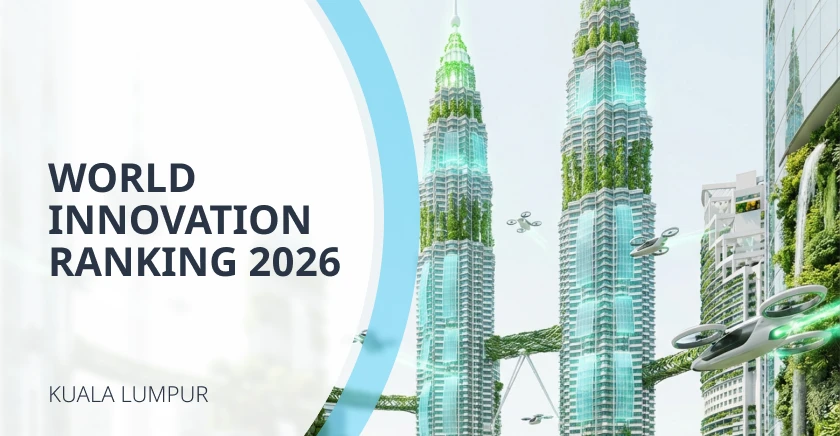
Kuala Lumpur is engineering a highly sustainable and integrated urban environment to counter the historical challenges of tropical climate degradation, massive population influx, and heavy traffic congestion. The physical city skyline is a profound testament to extreme vertical density. Compiling global architectural databases and local reports for 2026 reveals the sheer scale of the city's verticality. Malaysia as a nation boasts 319 buildings over 150 meters, 73 structures over 200 meters, and an elite class of six megatall buildings exceeding 300 meters. Concentrated almost entirely within the capital, Kuala Lumpur itself has officially surpassed the 200 skyscraper milestone, firmly placing it in the top ten global cities for high rise architecture. This skyline is universally anchored by the awe inspiring Merdeka 118, standing at 678.9 meters as the second tallest building on the planet, and the colossal Exchange 106.
Managing the environmental footprint of this substantial concrete and steel density is a critical policy priority. The city authorities have launched the Kuala Lumpur Net Zero Carbon Building Roadmap 2050. This definitive plan establishes severe mandates, demanding a 70 percent reduction in carbon emissions intensity across the city by 2030. Compliance is enforced not through analog bureaucracy, but via the Low Carbon Building Checklist 2.0 Web Portal, a mandatory digital tool that requires all new developments to mathematically prove their sustainability metrics before breaking ground. This extends beyond luxury commercial real estate. The program targets public social housing infrastructure, proving that deep energy efficiency retrofits directly lower operational costs and improve the quality of life for all income brackets.
The Tun Razak Exchange financial district operates as the ultimate template for this sustainable urbanism. The entire 70 acre precinct was master planned to achieve both Leadership in Energy and Environmental Design Gold status and the Green Building Index Platinum accreditation. The district operates its own localized circular economy, using advanced onsite treatment plants to recycle 80 percent of its total water usage, while extensive pedestrian walkways and a 10 acre city park mitigate the urban heat island effect.
At the same time,, the urban mobility environment in Kuala Lumpur is undergoing a radical, multi dimensional transformation. While ground based public transit like the Light Rail Transit systems undergo continuous expansion, the city is positioning itself as the early regional adopter of advanced air mobility. The regulatory frameworks governing Malaysian airspace have been systematically modernized to permit real world trial operations of electric vertical takeoff and landing aircraft.
Following highly successful pilotless flight proofs of concept executed by global operators like EHang in the Middle East, Kuala Lumpur has entered the advanced deployment phase. Comprehensive feasibility studies conducted by Volocopter and Skyports at major Malaysian airports have mapped out the physical infrastructure required for commercial vertiports. This intermodal connectivity is designed to drastically bypass ground level congestion, offering the potential to transform hour long traffic jams into sustainable, eight minute aerial transit routes connecting the city center directly with international transit hubs.
Barriers and challenges to exponential growth
Despite the massive influx of sovereign capital, visionary top down strategic masterplans, and cutting edge infrastructure, Kuala Lumpur faces several systemic friction points that threaten to bottleneck its steep trajectory toward absolute global tech supremacy. The 2026 economic data reveals distinct challenges in talent acquisition, regulatory execution, and the shifting dynamics of urban livability.
The primary and most acute barrier is a severe, specific talent deficit. While Malaysia produces a generally well educated and digitally literate workforce, the sudden, aggressive shift into high value frontiers like front end integrated circuit design, artificial intelligence machine learning, and advanced cybersecurity has created a massive vacuum for specialized engineering talent. Industry analyses indicate that nearly half of all local businesses are struggling with critical talent shortages. To compete for this limited pool of experts, companies are engaged in a fierce bidding war, driving a projected 4.8 percent average salary growth across the board in 2026, with the technology and life sciences sectors experiencing even steeper wage inflation. While local universities and technical vocational education training institutions are racing to update curriculums to align with industry needs, the immediate skills gap necessitates the importation of foreign expertise.
This reliance on foreign talent leads directly to the second major barrier, which is the regulatory friction surrounding immigration and the practical realities of establishing residency. The government recognized this issue and launched the DE Rantau Nomad Pass to attract global digital workers, tech professionals, and corporate executives. However, the operational execution presents high barriers to entry. Applicants are subjected to strict financial requirements, needing to prove an annual income of $24,000 USD for basic digital roles, escalating up to $60,000 USD for other professional sectors. Additionally,, expatriates attempting to integrate into the local ecosystem frequently encounter complex, archaic navigation of local banking infrastructure, convoluted cross border taxation liabilities, and difficulties in securing long term housing rentals or international school placements for dependents without standard employment passes.
Finally, the broader macroeconomic environment presents challenges regarding the cost of living and geopolitical exposure. While national inflation is relatively controlled compared to western economies, the rising costs associated with housing, food, and urban amenities in central tech corridors are putting pressure on the middle and working classes. The government has been forced to allocate massive sums, including RM1 billion under the RAHMAH program, to subsidize living costs and bolster domestic demand. Additionally, the local semiconductor industry remains highly sensitive to global trade wars. New international regulations regarding artificial intelligence chip movement and export controls force local supply chains to continuously adjust to geopolitical mandates, complicating long term capital expenditure planning for foreign direct investors.
To sustain its definitive blue ocean advantage, Kuala Lumpur must rapidly optimize its immigration bureaucracies, streamline the practical execution of its specialized visa passes, and upskill its domestic labor force before regional competitors can replicate its highly attractive financial incentive structures.
The future industries of Kuala Lumpur
Based on the density of venture capital deployment, aggressive state subsidies, and the migration patterns of global technical talent converging on the city, specific sectors are pulling away from the pack. The following industries represent the absolute vanguard of Kuala Lumpur's innovation economy in 2026.