WORLD INNOVATION RANKING 2026: Skyscrapers City-States Roundup by Arch Town Labs
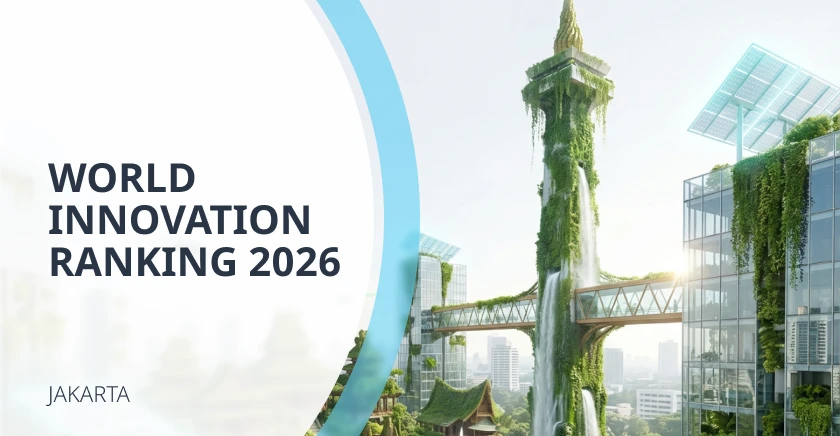
The global economic landscape of 2026 is defined by shifting centers of gravity and the relentless pursuit of specialized commercial dominance. While traditional financial capitals in the West grapple with regulatory saturation, aging physical infrastructure, and macroeconomic stagnation, Southeast Asia is engineering an entirely new class of megacity. At the absolute forefront of this transition is Jakarta. Stripped of its administrative burden following the relocation of the Indonesian federal government to the newly constructed Nusantara in East Kalimantan, Jakarta is executing an existential and highly lucrative pivot. It is no longer a political capital. Instead, under the newly minted legislative framework, it is rapidly optimizing itself as a pure apex predator of commerce, technology, sustainable innovation, and venture capital.
This comprehensive research report dissects the granular mechanics of Jakarta's transformation. By deeply analyzing its unique economic trajectory, its hyper-scaling digital infrastructure, its highly nuanced venture capital ecosystem, and its desperate yet innovative urban resilience strategies, we uncover how a city historically defined by bureaucratic density and severe climate vulnerability is successfully rebuilding itself into the indispensable financial routing layer of the ASEAN economy.
The calling card: Jakarta's status in the 2026 global economy
The narrative surrounding Jakarta in 2026 is one of structural liberation and aggressive economic concentration. The implementation of Law Number 2 of 2024 officially transitioned the city from the Special Capital Region to the Special Region of Jakarta, locally referred to as DKJ. Far from a demotion on the global stage, this legislative shift has unlocked unprecedented spatial, regulatory, and economic freedom for the metropolis. Free from the necessity of housing federal ministries, the national parliament, and military defense headquarters, the city administration is aggressively rezoning prime real estate to cultivate specialized business and innovation clusters, directly overseen by the newly formed Jakarta Agglomeration Council.
Macroeconomically, Jakarta remains the undisputed engine of the Indonesian archipelago. Despite the transfer of political power to Borneo, Jakarta continues to manage approximately 70 percent of the nation's total money circulation and serves as the primary gateway for foreign direct investment. The International Monetary Fund projects Indonesia's economy to expand by 5.1 percent year on year in 2026, driven heavily by Jakarta's robust domestic consumption, macroeconomic stability, and technology-driven private sector adaptability. The Indonesian government, capitalizing on this momentum, targets a more aggressive 5.4 percent growth rate for the year. This resilience is particularly notable given that global economic growth remains subdued and below its historical average, reflecting limited global momentum amid weakening trade activity and heightened geopolitical risks.
The financial architecture of the city is actively managed by the Financial Services Authority, which has established a strict policy perimeter for 2026. The authority has set three absolute priorities for the year, including strengthening the resilience of the financial services sector, developing a highly contributive financial ecosystem, and deepening financial markets with a specific advancement toward sustainable finance. Furthermore, the authority enforces consistent market conduct supervision through the Indonesia Anti-Scam Centre, collaborating with law enforcement to ensure a secure environment for international capital.
Jakarta is no longer merely participating in the global economy; it is aggressively structuring the rules of engagement for Southeast Asian venture capital. By leveraging its new DKJ status, the city is positioning itself not just as the center of the national economy, but as a premier global city that connects business centers in Indonesia with the rest of the world, offering a highly productive, comfortable, and autonomous environment for multinational enterprises.
Macroeconomic Indicators:
- National GDP Growth: 5.1 to 5.4 percent. Outpaces the global average of 3.3 percent, signaling strong emerging market resilience.
- Money Circulation: 70 percent. Jakarta retains absolute dominance over domestic liquidity despite the capital relocation.
- Global Growth Projection: 3.3 percent. Subdued global growth highlights Jakarta as a high-yield anomaly for foreign investors.
- Poverty and Welfare: Agglomeration Focus. The DKJ law explicitly mandates equitable welfare improvement and human rights protection alongside economic scaling.
The blue ocean trajectory: Engineering a post-competition ecosystem
To understand Jakarta's 2026 master strategy, one must look beyond the traditional fintech and consumer software battles that define cities like Singapore and Hong Kong. Jakarta is executing a classic Blue Ocean strategy by creating entirely new market spaces and rendering regional competition irrelevant. While other hubs battle for dominance in traditional asset management, decentralized finance, and crypto regulation, Jakarta is monopolizing a sector it is geographically destined to control, the global Blue Economy.
As the commercial center of the world's largest archipelagic nation, boasting 108,000 kilometers of coastline, 17,500 islands, and one of the planet's richest concentrations of marine biodiversity, Jakarta is translating ocean conservation into a high-yield, securitized asset class. The city's leadership, alongside major institutional investors, recognizes that economic growth and environmental stewardship are no longer competing priorities but unified investment vehicles capable of attracting massive ESG-driven capital flows.
The defining event of this strategic pivot is the inaugural Ocean Impact Summit, scheduled for June 2026 in Bali but fundamentally architected and financed by Jakarta-based institutions. Operated in partnership with the World Economic Forum and the global nonprofit OceanX, this summit is not merely an academic conference but a high-stakes deal-making platform designed to establish Indonesia as the undeniable global ocean economy hub. The summit focuses on scaling "blue-tech" innovations that align with blue economy principles, supporting economic growth, strengthening food security, and preserving marine ecosystems.
Jakarta-based startups and research funds are pioneering these highly specialized blue-tech innovations. Current commercialization efforts include artificial intelligence systems capable of detecting fish-killing diseases in aquaculture farms, deep-sea seaweed cultivation methodologies that promote carbon sequestration while generating income, and advanced biotechnology converting ocean and river plastics into synthetic fuels. Furthermore, there is a massive push toward utilizing deep-sea organisms for biocosmetics and biopharmaceutical development, establishing entirely new supply chains that bypass traditional terrestrial agriculture.
Perhaps the most lucrative aspect of this Blue Ocean trajectory is Jakarta's positioning as the clearinghouse for global blue carbon markets. Indonesia holds roughly 20 percent of the world's mangrove forests and extensive seagrass ecosystems, covering approximately 3.4 million hectares. These marine ecosystems absorb carbon dioxide far more efficiently than terrestrial forests, representing a heavily undervalued climate asset. Through the ASEAN Blue Carbon and Finance Profiling project, launched by the United Nations Development Programme and the Government of Japan, Jakarta is developing robust blue carbon profiles to unlock innovative financing solutions. This initiative involves identifying, mapping, and valuing carbon stored in marine ecosystems using satellite technology and field assessments, ultimately creating a new revenue stream for the country.
The new DKJ law heavily supports this Blue Ocean trajectory. By shedding its capital city status, Jakarta now possesses the legislative autonomy to design bespoke spatial planning and business clusters dedicated to marine biotech and climate tech. This targeted regulatory environment allows Jakarta to capture niche leadership in sectors that other global financial centers physically cannot replicate, targeting a global blue economy that the World Economic Forum estimates could generate a net economic benefit exceeding $15 trillion.
Technological foundation: The physical and digital compute layer
A financial capital is only as viable as its underlying digital compute, data storage, and connectivity layer. In 2026, Jakarta is experiencing a massive, historic injection of hyper-scale infrastructure, transitioning from a purely mobile-first consumer market to a highly sophisticated, AI-native enterprise hub.
Cloud compute and AI-ready data centers
The influx of foreign capital into Jakarta's physical internet infrastructure is staggering, driven by the realization that localized compute is necessary to bypass the latency of routing through Singapore. Edgnex Data Centers, a global digital infrastructure company backed by Dubai's Damac Group, is currently constructing a massive $2.3 billion artificial intelligence data center in Jakarta. Set for phase one completion by December 2026, this facility is designed to reach a projected capacity of 144 megawatts. Crucially, the facility utilizes high-density racks specifically engineered to support heavy AI workloads and targets an incredibly efficient power usage effectiveness of 1.32, addressing critical infrastructure gaps for low-latency AI training in the sweltering Southeast Asian climate.
Simultaneously, Equinix has heavily energized its presence in the city. Through a $74 million joint venture with local conglomerate Astra International, Equinix launched its JK1 International Business Exchange facility in the central business district. This eight-story facility houses 550 cabinets in its initial phase, with a target of 1,600 cabinets, and is explicitly designated as "AI-ready" to support scalable, high-performance digital infrastructure needs while providing direct access to over 50 global network service providers.
Furthermore, Google Cloud has radically expanded its existing Jakarta cloud region to meet surging enterprise demand. This expansion introduces advanced, next-generation silicon chips and software capabilities that are fully integrated and purpose-built for the AI era. Local enterprises and government ministries now have direct access to Google's Vertex AI and BigQuery platforms locally, enabling them to build, customize, and deploy AI models for specific business functions while strictly adhering to Indonesian data residency laws, a critical requirement for the digital banking and healthcare sectors.
Data Center Infrastructure:
- Edgnex AI Data Center: Backed by Damac Group with a $2.3 Billion investment. It features 144 MW capacity, high-density AI racks, a PUE of 1.32, and is expected to be live by Dec 2026.
- Equinix JK1 IBX: Formed through an Astra JV with a $74 Million investment. It is an 8-story CBD facility with 1,600 cabinet capacity and access to 50+ network providers.
- Google Cloud Region: Operated by Google Cloud. It includes advanced silicon deployment and localized Vertex AI and BigQuery access.
Connectivity infrastructure and next-generation networks
While physical data centers provide the compute, the connectivity layer in Jakarta is evolving rapidly, albeit with unique regulatory hurdles. 5G infrastructure is being heavily optimized for energy use and scalability, powering intelligent IoT ecosystems in smart offices and retail environments across the city.
A landmark achievement in this space occurred when Indosat Ooredoo Hutchison successfully trialed Southeast Asia's first AI-powered 5G call, working in tandem with Nokia and Nvidia. This demonstration linked a device in Jakarta with a conference stage in Europe in real-time, utilizing Artificial Intelligence in the Radio Access Network.16 This AI-RAN architecture integrates computing directly into the network, placing processing power closer to the end user to reduce communication delays and improve energy efficiency, proving that complex robotic controls can be managed across borders instantaneously.
Looking even further ahead, Jakarta-based researchers, supported by local telecommunications giants, are actively developing compact phased-array antennas for future 6G networks. These antennas are designed to operate at millimeter-wave frequencies and utilize electronic beam steering without mechanical movement, allowing them to track fast-moving low-earth orbit satellites, ensuring that the archipelagic nation remains connected regardless of physical terrain limitations.
The local unicorn ecosystem
Jakarta's technological foundation is validated and utilized by its highly matured startup ecosystem. By 2026, the city's most successful startups have moved far beyond aggressive, subsidized customer acquisition, focusing instead on sustainable unit economics, B2B infrastructure, and deep integration into the daily lives of Indonesians. They win by mastering the intense friction of the Indonesian archipelago, creating products that survive fragmented logistics and price-sensitive users, making them immediately export-ready for the rest of Southeast Asia. Below are five defining unicorns headquartered in Jakarta that perfectly illustrate this maturity:
- Traveloka Founded in 2012, Traveloka began with the simple goal of helping Indonesians book flights without navigating multiple fragmented websites. By 2026, it has evolved into a massive, multi-vertical travel and lifestyle super-app dominating Southeast Asia. Valued highly in the social and leisure sector, the company has mastered the complexities of localized payment preferences, leveraging virtual accounts and proprietary digital payment methods to ensure smooth transaction flows. It uses advanced machine learning to offer personalized booking experiences, embedded insurance, and hyper-local tourism experiences, driving domestic mobility.
- Akulaku Securing a staggering $522 million in funding to date, heavily backed by Japan's Mitsubishi UFJ Financial Group, Akulaku is the region's absolute heavyweight in digital consumer finance.22 The company built its business around democratizing access to credit for the massive underbanked population of Indonesia. It has evolved from a simple buy-now-pay-later provider into a comprehensive digital banking and finance platform, scaling its risk-assessment algorithms and virtual credit models across multiple ASEAN markets.
- eFishery A perfect reflection of Jakarta's Blue Ocean strategy, eFishery achieved unicorn status by targeting a sector historically ignored by traditional venture capital, aquaculture. Founded in 2013, the agtech company provides IoT-enabled smart feeding systems and cloud-based farm management software to fish and shrimp farmers across the country. By digitizing the feed supply chain and utilizing farm data to provide unbanked farmers with access to working capital loans, eFishery has cornered a highly lucrative, non-disruptive niche with massive global export potential.
- DANA Launched in 2018, DANA is a foundational digital wallet and TechFin infrastructure provider. Rather than targeting niche early adopters or crypto enthusiasts, DANA focused on everyday transaction utility across varying socio-economic classes. It operates deeply integrated payment systems that serve as the backbone for countless micro, small, and medium enterprises transitioning to the digital economy, offering accessible financial services that heavily influence Jakarta's rapid shift toward a cashless society.
- Xendit Often compared to global giants like Stripe, Xendit is a B2B financial technology company that abstracts the extreme complexity of Southeast Asian payment routing.18 Reaching unicorn valuation after a massive Series D round, Xendit provides robust APIs that allow e-commerce platforms, local marketplaces, and enterprise SaaS providers to securely process disbursements, manage virtual accounts, and handle credit cards across multiple fragmented regulatory regimes. By focusing on serving businesses rather than everyday consumers, Xendit has become the invisible rails powering the region's digital economy.
Investment landscape: The architecture of Southeast Asian capital
The capital deployment environment in Jakarta in 2026 is deeply sophisticated and structurally mature. The ecosystem is no longer reliant solely on speculative foreign capital dipping into emerging markets. Instead, it is fueled by a highly active, hybrid engine of international mega-funds, sovereign wealth, corporate strategics, and massive influxes of local "old money" from Indonesian conglomerates diversifying their portfolios away from legacy industries.
Investors in the city are actively prioritizing applied artificial intelligence for supply chain optimization, climate-tech, carbon accounting, embedded finance, and vertical software-as-a-service. The focus has shifted sharply toward B2B and B2B2C platform-based models that exhibit strong corporate governance, path-to-profitability metrics, and immediate commercial traction within Jakarta's dense corporate network.
The investment architecture of the city relies on seven distinct pillars of capital allocation, each playing a critical role in the lifecycle of an enterprise.
1. Angels and syndicates
The earliest stage of capital is highly active and highly localized, driven by platforms like the Angel Investment Network Indonesia, which claims to be the first and largest investment network in the country, connecting entrepreneurs with hundreds of thousands of active investors globally. Prominent individual angels and super-angels, many of whom are exited founders leveraging their liquid capital, provide critical bridge funding for pre-seed ventures. Key active players include Arya Setiadharma, Edward Tirtanata, and Budi Handoko, who frequently participate in early marketplace, logistics, and productivity software rounds. These investors bring not just capital, but critical local network access to navigate early regulatory hurdles.
2. Accelerators and incubators
To structure raw entrepreneurial talent into institutional-grade investable vehicles, Jakarta relies heavily on physical and virtual accelerators. Endeavor Indonesia stands out by selecting and supporting high-impact entrepreneurs who are ready to scale their businesses across various sectors. Antler is recognized as one of the most active seed-stage investors globally, utilizing a "Day Zero" approach in Jakarta to back entrepreneurs before their companies even launch, providing co-founder matching and business model validation. Regional telecommunications giants also operate their own rigorous programs, such as Indigo by Telkom Indonesia, which acts as a massive funnel for corporate innovation.
3. Family offices
Perhaps the most fascinating shift in the 2026 investment landscape is the institutionalization of local family offices. Second and third-generation scions of Indonesia's wealthiest families are bypassing their grandfathers' traditional industries, such as palm oil, real estate, and mining, to aggressively fund technology startups. The Sinar Mas group operates SMDV, heavily backing e-commerce infrastructure and digital logistics. Emtek utilizes KMKLabs to fund media and tech solutions, while the Salim Group actively deploys capital into food supply chains and consumer platforms. Furthermore, sophisticated multi-family offices like Alto Partners are structuring complex deals to align traditional Asian wealth with new tech ecosystems, seeking yields in private equity and venture capital that public markets currently fail to deliver.
4. Venture capital funds
Institutional venture capital remains the core driver of early to growth-stage scaling. Alpha JWC Ventures stands as a dominant, highly visible force, rooted deeply in Indonesia with a massive portfolio of over 70 active companies, including unicorns like Kopi Kenangan and Ajaib, focusing heavily on consumer tech and fintech. Intudo Ventures operates a highly unique model, acting as an independent firm backed by over 30 Forbes-listed billionaires globally, facilitating market entry into Indonesia for US tech while investing concentrated bets in local early-stage companies.31 Other highly active funds include BEENEXT, deploying capital into enterprise SaaS and sustainability, and Skystar Capital, focusing on tech-enabled businesses.
5. Corporate venture capital
Incumbent corporations are defending their market share against disruption by actively buying into it. Mandiri Capital Indonesia, the venture arm of Bank Mandiri, strategically injects funding into fintech startups that can seamlessly integrate into the bank's legacy infrastructure, creating immediate distribution scale. Similarly, Telkomsel Mitra Inovasi leverages its parent company's massive telecommunications data pool to support mobility, consumer tech platforms, and digital lifestyle applications, providing portfolio companies with unparalleled access to millions of active mobile users.
6. Grants and state subsidies
The DKJ government and the national Ministry of Finance deploy aggressive fiscal stimuli to manipulate market behavior and support strategic sectors. To empower grassroots commerce, the government has officially extended the 0.5 percent final income tax rate for MSME taxpayers with revenues up to 4.8 billion rupiah until 2029, supporting this with a massive 32.8 trillion rupiah budget. Furthermore, to support the labor market, workers in specific labor-intensive industries earning below 10 million rupiah per month enjoy full income without Article 21 tax deductions, effectively boosting domestic purchasing power. On the macro scale, the government targets pioneer industries, offering up to 100 percent corporate income tax exemptions for investments over 100 billion rupiah in sectors like renewable energy, pharmaceuticals, and robotics.
7. Technoparks and special economic zones
Physical agglomeration remains crucial for innovation, and Jakarta has expanded its footprint through satellite technoparks. BSD City, located on the periphery of Jakarta, has fully matured into the "Silicon Valley of Indonesia". Its 26-hectare Digital Hub is officially declared a Special Economic Zone, covering digital technology, healthcare, and creative economies. The hub incentivizes commercial real estate integration with academic excellence, hosting institutions like Monash University and BINUS University, providing a seamless, immediate pipeline between digital talent creation and corporate deployment within the ecosystem.
Investor Categories and High-Activity Entities:
- Angels: High-activity entities include ANGIN, Arya Setiadharma, and Budi Handoko, focusing on pre-seed marketplaces, IoT, and productivity SaaS.
- Accelerators: High-activity entities include Antler, Endeavor Indonesia, and Indigo, focusing on founder matching, operational scaling, and MVP support.
- Family Offices: High-activity entities include SMDV, KMKLabs, Salim Group, and Alto Partners, focusing on e-commerce infra, supply chain logistics, and consumer.
- VC Funds: High-activity entities include Alpha JWC, Intudo Ventures, and BEENEXT, focusing on applied AI, Web3, FinTech, and GreenTech.
- Corporate VC: High-activity entities include Mandiri Capital and Telkomsel Mitra Inovasi, focusing on banking APIs, embedded finance, and telecom data.
- Technoparks: Represented by BSD City Digital Hub SEZ, focusing on smart city tech, health-tech, and academic-industry links.
Urban environment and sustainability: Rebuilding a sinking metropolis
Jakarta's rapid technological and economic acceleration occurs against a backdrop of severe, existential environmental vulnerability. The city is locked in an intense race against geology and climate change. Due to decades of excessive groundwater extraction required to serve its massive population, combined with the sheer weight of its skyscraper density, Jakarta is experiencing extreme land subsidence. Areas in the northern coastal sectors of the city are sinking at a terrifying rate of up to 25 centimeters per year, making it the world's fastest-sinking metropolis. Without radical, multi-billion dollar intervention, projections indicate that vast swaths of northern Jakarta could be permanently underwater by 2050.
The Giant Sea Wall and infrastructure mega-projects
To counter this threat and protect trillions of dollars of economic exposure, the government is executing the National Capital Integrated Coastal Development master plan, globally recognized as the Giant Sea Wall project. This $40 billion mega-project is an unprecedented combination of severe climate adaptation and ambitious real estate reclamation. The master plan is divided into three critical phases, beginning with the construction of coastal embankments (Phase A), followed by the construction of massive offshore dikes (Phase B and C) designed to enclose Jakarta Bay into a controlled retention lake.
By 2026, the project has seen the completion of over 17 kilometers of embankments, with intensive construction continuing in areas like Muara Angke and Sunda Kelapa. While the project is hailed as an engineering marvel, it faces intense scrutiny from environmental critics and community organizations like Ciliwung Merdeka, who warn that enclosing the bay without first treating the city's highly polluted rivers could create a massive "septic lagoon". Consequently, Jakarta is simultaneously forced to invest heavily in advanced wastewater treatment plants and the revitalization of its 13 major river systems.
Simultaneously, the city is radically upgrading its internal transit grid to reduce surface-level congestion and curb severe carbon emissions. The Mass Rapid Transit system is undergoing massive expansion. Phase 2A, tunneling 28 meters beneath the dense urban core to connect Bundaran HI to Kota Station, is progressing rapidly, with full tunnel connections expected by August 2026. In parallel, the Light Rail Transit Phase 1B expansion, connecting Velodrome Station to the central Manggarai Station, is scheduled to begin commercial operations in the third quarter of 2026, consolidating Manggarai as the definitive mobility hub of the metropolis.
Smart city governance and net-zero architecture
At the software layer of urban management, the Jakarta Provincial Government operates the highly sophisticated JAKI super-app. Initially launched as a simple information portal, JAKI has evolved by 2026 into a comprehensive civic operating system integrating healthcare, mobility, emergency response, and citizen reporting. Using the Citizen Relation Management module, residents act as real-time urban sensors, mapping flood risks through the Pantau Banjir feature and reporting infrastructure decay via JakLapor to direct municipal resources with pinpoint efficiency. Furthermore, the city operates the Future City Hub, a physical collaboration space featuring design thinking labs and communal prototyping areas, allowing startups and academia to co-create solutions directly with the government.
In the built environment, Jakarta is enforcing strict sustainability mandates to curb emissions. The newly enacted Governor's Regulation Number 5 enforces stringent energy and water efficiency codes for all new commercial structures, a critical legislative move given that the building sector accounts for nearly 60 percent of the city's greenhouse gas emissions.56 The Green Building Council Indonesia is aggressively auditing properties to align with the Net Zero Whole Life Carbon Roadmap, ensuring that the rapidly expanding corporate skyline does not undermine the city's legally binding 2050 net-zero targets.57 Public infrastructure is leading by example, with the introduction of Net Zero Carbon Schools integrating renewable energy, and the MRT optimizing its facilities to utilize thousands of megawatt-hours of renewable energy.
The vertical expansion
Despite the acute subsidence challenges, Jakarta's role as a global economic center demands intense economic density, forcing continuous vertical growth. By 2026, the skyline has transformed dramatically, positioning Jakarta as the undisputed high-rise queen of the Southern Hemisphere, rivaling the density of traditional hubs.
Building Height Categories:
- Over 150 meters: 149 buildings. This represents a rapid increase driven by commercial real estate and multinational corporate demand.
- Over 200 meters: 51 buildings. These are highly concentrated in the central business districts, forming a dense corporate canopy.
- Over 300 meters (Supertall): 2 buildings. This includes the elegant Luminary Tower, reflecting massive structural engineering feats.
- Tallest Structure: Autograph Tower. It stands at 382.9 meters, officially the tallest building in the Southern Hemisphere.
Barriers and challenges: The friction of hyper-growth
While the capital inflows, infrastructure mega-projects, and legislative upgrades are historic in their scale, Jakarta's trajectory as an apex global financial center faces several deep-rooted, systemic barriers that continuously threaten to throttle its commercial velocity.
The regulatory paradox of global tax treaties
Jakarta has historically relied on aggressive, location-based tax holidays to attract foreign direct investment, particularly within its Special Economic Zones, where pioneer industries could secure up to 100 percent corporate tax exemptions for extensive periods. However, in 2026, this strategy has violently collided with the OECD's Pillar Two framework, which mandates a Global Minimum Tax of 15 percent for multinational enterprises generating over 750 million euros.
The implementation of the Income Inclusion Rule dictates a zero-sum game for local regulators. If a foreign multinational pays zero tax in a Jakarta SEZ due to a local incentive, the company's home country possesses the legal right to impose a "top-up tax" to collect the 15 percent difference. This essentially neutralizes Jakarta's competitive fiscal advantage, transferring potential tax revenue directly from Indonesia back to Western capitals. The Ministry of Finance is currently scrambling to recalibrate the DKJ investment framework, attempting to shift away from pure tax holidays toward targeted infrastructure subsidies, grant programs, and streamlined licensing to remain globally attractive without violating international tax treaties.
Telecommunications spectrum congestion
Despite the global hype surrounding 5G capabilities and the early 6G research trials occurring in the city, the actual commercial rollout of robust 5G infrastructure in Jakarta is painfully sluggish. The primary barrier is an acute, deeply political spectrum shortage. The Ministry of Communication and Information Technology acknowledges a massive deficit, requiring at least 2042 MHz of spectrum frequency but currently facing a shortage of roughly 1310 MHz to future-proof the national network.
The critical 700 MHz analog TV band and the optimal 3.3-3.4 GHz bands are heavily congested and require extensive, politically sensitive clearing processes. Consequently, major telecom operators like Telkomsel, XL Axiata, and Indosat are holding back on massive, nationwide capital expenditures for 5G. They argue that current 4G infrastructure adequately handles existing consumer demand for video streaming and social media, leaving next-generation enterprise AI, autonomous logistics, and high-density IoT applications starved for the low-latency bandwidth required to truly modernize the industrial sector.
The digital talent deficit
Finally, the most critical bottleneck to Jakarta's sustained hyper-growth is the acute deficit in advanced human capital. While the nation boasts a massive demographic dividend with a labor force surpassing 153 million, the qualitative reality is stark. Approximately 30 percent of technology companies report severe, ongoing difficulties in sourcing talent with the necessary deep-tech skills. The traditional educational infrastructure has historically lagged far behind the rapid digitalization of the enterprise economy, creating a massive skills mismatch.
To combat this, a massive structural shift is underway toward "skills-first" hiring, with corporate HR departments increasingly bypassing traditional university degrees in favor of specialized vocational training and digital certifications. The government is leading this charge with initiatives like the Digital Talent Scholarship and specific capacity-building programs run by Jakarta Smart City, aiming to cultivate a staggering 9 million capable digital professionals by 2030. Training providers like DataGarda are explicitly aligning their curricula with national digital initiatives, focusing on cloud adoption, AI readiness, and ISO 27001 cybersecurity resilience. However, in 2026, the immediate demand for senior AI engineers, cybersecurity architects, and data scientists vastly outstrips the local supply. This artificial scarcity inflates operational costs for early-stage startups and forces many multinational corporations to outsource highly critical backend development outside the region, leaking economic value out of the Jakarta ecosystem.