WORLD INNOVATION RANKING 2026: Skyscrapers City-States Roundup by Arch Town Labs
Visiting card: macro-financial status of the city in global economy 2026
Gross domestic product growth has stabilized at a robust 3.0 percent for the fiscal year 2026, underpinned by sustained policy support, rigorous capital inflows, and a doubling of net Hong Kong dollar liabilities within the commercial banking sector. The broader macroeconomic indicators paint a picture of a jurisdiction that has engineered a soft landing while preparing for aggressive future scaling. Inflation remains highly controlled at an estimated 1.6 percent, while the three-month HIBOR rate has settled at a predictable 2.50 percent, creating a highly stable environment for institutional capital deployment and corporate debt structuring.
The structural identity of the city is currently governed by a formal "Four centers and one hub" macroeconomic strategy formulated by the regional government. This framework deliberately shifts the city away from relying solely on traditional equity, real estate and legacy retail banking, instead pivoting heavily towards a high-density headquarters economy, cross-border intellectual property innovation and deep-tech industrialisation. An International Monetary Fund article IV consultation recently conducted reaffirmed the absolute resilience of the financial system in the city, highlighting its robust institutional frameworks and ample policy buffers as well as the continued smooth operation of the linked exchange rate system. This peg, which keeps the USD-HKD exchange rate at 7.78 strictly, remains the foundation for global investor confidence in the region and ensures that capital can move across borders without risking currency devaluation.
Global capital allocation patterns in 2026 clearly demonstrate a bifurcated, yet highly complementary, utility for the city. On one side of the macroeconomic spectrum, Hong Kong remains the ultimate global safe haven for physical asset hedging. Institutional portfolios frequently utilize the territory's London Bullion Market Association-certified vaults for primary risk-off allocations in physical gold. Professional portfolio managers operating in the region typically implement tiered allocation strategies during risk-off periods, using a 5-15% primary allocation for systemic risk hedging, taking advantage of the city's unique position, combining geographic proximity to mainland China with an inherited Western regulatory, ethical, and legal framework, supported by bodies like the Professional Numismatists' Guild and the Industry Council for Tangible Assets.
On the other side of the spectrum, the export momentum of the city is completely redefined by persistent strong global demand for electronic components manufactured with artificial intelligence across the border. These components use Hong Kong as a primary gateway to international markets and rely on the city's optimized logistics networks. The city now actively structures, cleans and accelerates flows of both physical assets and advanced technology hardware.
To provide a clear view of the current financial baseline, the following core economic metrics define the city in 2026:
- Gross Domestic Product (GDP) Growth: Reached 3.2% in 2025 and is projected at 3.0% for 2026. This indicates sustained momentum following the recovery phase, driven by policy support and tech-hardware exports.
- Inflation Rate (Consumer Price Index): Realized at 1.8% in 2025 and projected to drop to 1.6% in 2026. Highly controlled inflation allows for predictable operational costs for incoming multinational headquarters.
- USD-HKD Exchange Rate (End of Period): Maintained strictly at 7.78 for both 2025 and 2026. The Linked Exchange Rate System remains untouched, providing currency stability for offshore capital.
- 3-Month HIBOR (End of Period): Dropping from 2.75% in 2025 to a projected 2.50% in 2026. Lower borrowing costs directly stimulate local venture capital activity and corporate research investments.
Blue ocean trajectory: architecting the new capital arbitrage
Hong Kong is actively competing with traditional financial centers such as New York, London and even regional peers in a zero-sum game. Instead, the city has aggressively captured a highly specific "blue ocean" characterized by two main vectors. The first vector is serving as a launchpad for "strategic globalization" of Chinese enterprises in the mainland. The second vector is the institutionalization of the Web3 and digital assets economy.
The launchpad for strategic globalization
Chinese enterprises have definitely moved past the era of simply exporting manufactured goods. According to Professor Ma Xufei, of the CUHK Business School, at the recent Southern Finance and Economics Forum 2025, Chinese firms progressed through distinct historical stages. The initial phase, spanning the 1980s and 2000, focused on "bringing in" and integrating into global supply chains through original equipment manufacturing. The second phase, from 2001 to 2017, was characterized by "racing to the sea," with aggressive cross-border mergers and acquisitions. Today, these companies have entered a sophisticated stage of strategic globalization that requires sophisticated offshore legal frameworks, intellectual property protection, and complex cross-border capital structuring.
Hong Kong serves as an exclusive "super value-add" and high-value-added supply chain service center for this transition. The city capitalizes on the massive integration efforts of the Greater Bay Area, which is reshaping trade and connectivity in Asia. By using a "Hong Kong plus mainland" dual entity model, multinational corporations establish holding companies in Hong Kong to manage wholly foreign-owned businesses in mainland cities such as Shenzhen, Guangzhou and Zhuhai. This structural arbitrage enables highly optimized tax planning, free cross-border capital flow, and seamless bridging of Western capital with Eastern production.
The government actively facilitates this through mechanisms established by Invest Hong Kong and the Hong Kong Trade Development Council, providing one-stop advisory services to attract mainland enterprises. As a direct result, the city currently hosts over 1,400 regional headquarters set up by non-local enterprises, with over 300 originating directly from the mainland, operating as offshore command centers for global operations.
Institutionalizing the virtual asset ecosystem
Simultaneously, the city has engineered a massive blue ocean of digital asset regulation. While other global jurisdictions engage in regulation through enforcement or outright bans, Hong Kong has systematically built a pristine institutional-grade regulatory architecture for virtual assets. The Securities and Futures Commission have fully activated the LEAP framework along with the ASPIRE roadmap.9 The LEAP focuses on high-level integration of virtual asset ecosystems with the real economy, driving tokenization of real world assets such as government issuance of green bonds in the form of tokens.
By 2026, the licensing regime will have been expanded significantly beyond simple spot trading platforms. Mandatory licensing will now explicitly cover virtual asset advisory services, aligning with the definition of Type 4 regulated activities under the Securities and Futures Ordinance. This ensures that any entity providing advice or issuing analytical reports on virtual assets is strictly regulated, while maintaining statutory intra-group and incidental exemptions. Furthermore, any person conducting business in managing virtual asset portfolios must obtain formal licensing, subject to fitness-for-purpose tests.
The regulatory framework is actively expanding market liquidity. The Securities and Futures Commission now allows licensed brokers to offer margin financing to securities clients with strong credit profiles and sufficient collateral. Simultaneously, it has provided a clear, high-level framework for virtual asset trading platforms to develop perpetual contracts and leveraged instruments exclusively for professional investors. To protect retail and institutional investors alike, the legislation dictates that virtual asset dealers must hold client assets only with local, SFC-regulated virtual asset custodians, highlighting deep concerns regarding the enforceability and oversight of overseas custodians. By bringing derivatives, margin financing, custodian services, and advisory activities under a stringent but clear regulatory umbrella, Hong Kong has effectively cornered the market for institutional-grade Web3 capital, offering a predictable legal environment that purely unregulated offshore hubs cannot replicate.
Technological foundation: the architecture of cognitive and spatial computing
The digital infrastructure of the city is currently undergoing a massive state-sponsored upgrade, pivoting away from traditional consumer telecommunications toward native artificial intelligence integration, edge computing, and next-generation connectivity protocols. The core of this transformation is rooted in localized raw computing power and the aggressive, early-stage rollout of 6G networks.
Artificial intelligence and massive localized compute
Recognizing that computing power is the primary currency of the future economy, the government has injected HK$1 billion to formally launch the Hong Kong AI Research and Development Institute in 2026. This institution bridges upstream algorithmic research with immediate midstream and downstream commercial translation, pushing practical use cases across logistics, finance, and urban management.
The physical infrastructure supporting this cognitive leap is anchored at the Cyberport Artificial Intelligence Supercomputing Centre. Operating at a staggering capacity of 3,000 PFLOPS, this facility serves as the central nervous system for the city. It is specifically designed to handle localized large language model training, complex algorithmic financial modeling, and the massive data streams generated by smart city sensors. To democratize access to this massive compute capacity and prevent monopolization by large tech conglomerates, the government activated a HK$3 billion AI Subsidy Scheme. This program covers up to 70 percent of the computing service list price for eligible local institutions, startups, and strategic enterprises.
In the public sector, the Digital Policy Office leads the AI Efficacy Enhancement Team, executing a mandate to fundamentally re-engineer government workflows. By the end of 2026, they are tasked with integrating artificial intelligence tools across 100 specific public administration procedures, drastically accelerating licensing and service approvals for citizens and corporations.
Telecommunications: the 6G horizon and spatial connectivity
Hong Kong has positioned itself at the absolute bleeding edge of global telecommunications. Anticipating the heavy data requirements for autonomous mobility, edge intelligence, and spatial computing, the city emerged as the first global economy to auction spectrum in the 6 to 7 GHz band in late 2024, deliberately laying the foundational frequency groundwork for 6G deployment.
The transition from 5G-Advanced to 6G in this specific urban topology requires extreme technical innovation. 6G networks must be designed as AI-native from the start, with inherent capabilities to support seamless distributed AI model training across the network. Local academic institutions, notably Hong Kong University of Science and Technology, are leading dedicated research projects focused on sustainable development, non-terrestrial networks, and integrated sensing and communication architectures.
The dense verticality of the city requires specialized hardware. Research is heavily focused on terahertz phase array antenna modules, low-loss materials, and the deployment of reconfigurable intelligent surfaces. These surfaces are particularly vital in a city with an extreme vertical canyon effect. Maintaining terahertz signal integrity requires manipulating the physical environment to reflect and guide data streams around concrete and steel, while also maintaining low bands for wide area coverage and high bands above 7 GHz for extreme capacity. Telecommunications operators are engaged in pilot programs with major providers like HKT, securing permissions to expand internet service provider operations across borders and integrate the city's infrastructure with the broader Southeast Asian digital economy.
Local unicorns driving the innovation economy
The technological landscape is anchored by a highly mature cohort of billion-dollar enterprises. The local startup ecosystem has accelerated rapidly, raising over $5.8 billion USD in recent years, led by ventures bridging physical infrastructure with decentralized finance. The following five unicorns exemplify the city's dominance in logistics, digital property rights, advanced fintech, and decentralized infrastructure:
- Lalamove ($10 Billion Valuation | Logistics & Supply Chain): Operating a highly scalable on-demand delivery platform, the company connects enterprise clients and individual users with an expansive network of local drivers for same-day delivery. It serves as the critical last-mile logistics backbone across Asian markets, backed by heavyweights like Hillhouse Investment, Jane Street Capital, and Shunwei Capital.
- Animoca Brands ($6 Billion Valuation | Web3 & Metaverse): A global powerhouse in digital property rights, blockchain gaming, and decentralized education. The firm develops premier projects like The Sandbox and Open Campus, while actively backing over 600 external builders in the Web3 space. It provides essential digital asset services linking traditional institutional finance to the open metaverse.
- Micro Connect ($2 Billion Valuation | Deep FinTech): Pioneering a completely novel financial asset class known as "Daily Revenue Contracts." The platform programmatically connects global institutional capital directly to the daily cash flows of micro-enterprises across mainland China, fundamentally turning local storefront revenues into globally tradable and highly transparent assets.
- RedotPay ($1 Billion Valuation | Crypto Payments): Bridging the gap between digital assets and traditional fiat payment rails, the company issues stablecoin-powered payment cards and operates a multi-currency wallet. It enables frictionless, real-time conversion and spending of cryptocurrency for daily retail transactions on a global scale, backed by Coinbase Ventures and Accel.
- Humanity Protocol ($1 Billion Valuation | Web3 Identity): Focused on decentralized identity infrastructure, the company provides developers with a robust "proof-of-personhood" biometric system. This technology is critical for ensuring sybil-resistance and authenticating unique human actors across decentralized applications and blockchain networks, securing funding from Animoca Brands and Pantera Capital.
Investment landscape: sovereign acceleration and institutional capital
The 2026 investment environment in Hong Kong is characterized by a massive influx of private wealth, aggressive state-backed co-investment, and a highly active corporate venture sector. The ecosystem has evolved far beyond early-stage angel investing, focusing now on mature capital deployment, series-stage scaling, and strategic asset tokenization.
The family office phenomenon
The most profound structural shift in the capital landscape is the explosive growth of single-family offices. By the end of 2025, over 3,380 active single-family office operations were documented in the city, representing a staggering 25% growth over a two-year period. This growth vastly outpaced competing hubs like Singapore, which currently has around 2,000 such entities. The divergence is primarily driven by mainland Chinese wealth seeking offshore access without the strict S$50 million asset management requirements imposed by Singaporean authorities.
These entities are not passive pools of capital. Market study indicates that single-family offices contribute an estimated HK$12.6 billion annually to the local economy through operating expenditures alone, directly employing over 10,000 full-time financial professionals. The operational thesis of Hong Kong family offices heavily skews toward opportunistic, principal-led investments, exhibiting a high tolerance for complex, idiosyncratic deals in real estate, structured credit, and special situations. They frequently close capital commitments within a rapid 6- to 18-month window.
Geographically, these offices are refocusing. A recent study indicated a primary theme of reducing exposure to the US market in favor of increasing investment positions within Hong Kong and the broader Asia-Pacific region. Sector-wise, their preferences heavily lean towards technology, media and healthcare, with artificial intelligence standing out as the main investment theme. To accelerate this trend, the 2026 legislative agenda includes an expansion of preferential tax regimes for family-owned investment vehicles. This will broaden the scope of qualifying tax-exempt investments to include digital assets, private credit and specialized loans. The city's role as a tax efficient hub for private wealth is reinforced.
Venture capital and corporate innovation
The traditional venture capital space remains highly active, though it has shifted sharply towards artificial intelligence infrastructure, robotics and advanced manufacturing. Significant liquidity is returning to the market, driven by a steady pipeline of initial public offerings on the local exchange and an increasing reliance on secondary market transactions by venture funds.
Corporate venture capital is similarly evolving, but it faces notable structural challenges. According to a recent industry report, 51% of corporate venture funds cite bureaucratic decision-making and slow execution speeds as persistent operational challenges. The modern ecosystem rewards speed, and corporate prioritization often creates internal roadblocks. To circumvent these limitations, many financial corporate arms are deliberately structuring themselves off-balance sheet to maintain agility and operational independence from their parent corporations. Major financial institutions actively drive the narrative, for example, HSBC hosts the exclusive Global Investment Summit, bringing together global policymakers, tech founders, and capital allocators to discuss the intersection of geopolitics and disruptive technology.
Typology of active investors
The capital stack in the city is highly diversified, ranging from seed-stage angel networks to state-sponsored matching funds. The list below categorizes the most active investor classes powering the 2026 innovation ecosystem:
- Angels: Focused on seed-stage liquidity, rapid deployment, and syndication. The environment is heavily regulated, ensuring high-quality deal flow for accredited individuals. A prominent example is AngelHub, the first SFC-regulated tech investment platform allowing deal-by-deal co-investment.
- Accelerators: Operating as high-touch incubators, providing initial capital alongside intense mentorship, technical resources, and global market access. Prominent examples include ParticleX (Micro VC and enabler), Fomocraft Ventures (Web3 focus), and COINS GROUP.
- Family offices: Dominant players deploying patient, multi-generational capital. Highly opportunistic, targeting deep-tech, digital assets, and special situations without strict AUM minimums. Notable examples include Rockpool Capital (multi-family office platform offering venture debt and equity) and Arete Capital Asia.
- Venture funds: Institutional capital deploying Series A through Pre-IPO rounds. Heavy focus on robotics, enterprise AI, and Web3 infrastructure with increasing use of secondary markets. Active funds include Alibaba Entrepreneurs Fund, SOSV, MindWorks Capital, HashKey, and Ceyuan Ventures.
- Corporate venture: Strategic capital driven by major conglomerates aiming for technological synergy. Often structured off-balance sheet to avoid bureaucratic delays. Examples include Arch Capital Management, CE Ventures, and HSBC Global Investment Research.
- Grants and subsidies: Aggressive non-dilutive state funding designed to lower the barrier to entry for deep-tech hardware, computing costs, and academic spin-offs. Key programs include the AI Subsidy Scheme (AISS), Innovation and Technology Fund (ITF), and Enterprise Support Scheme (ESS).
- Tech parks: Physical nexus points providing heavily subsidized laboratory space, computing infrastructure, and concentrated talent pools for enterprise scaling. Cyberport (expanding via Project 5) and Hong Kong Science and Technology Parks (HKSTP) are the primary examples.
For startups, the government provides critical leverage. The Innovation and Technology Fund operates multiple schemes, such as the Enterprise Support Scheme, which provides dollar-for-dollar matched funding up to HK$10 million per approved research and development project. Furthermore, the Pilot Innovation and Technology Accelerator Scheme aims to attract professional start-up service providers to set up physical operational bases in the city, subsidizing their efforts to provide venue facilities and domain expert consultation to early-stage founders.
Urban environment and sustainability: vertical engineering and smart mobility
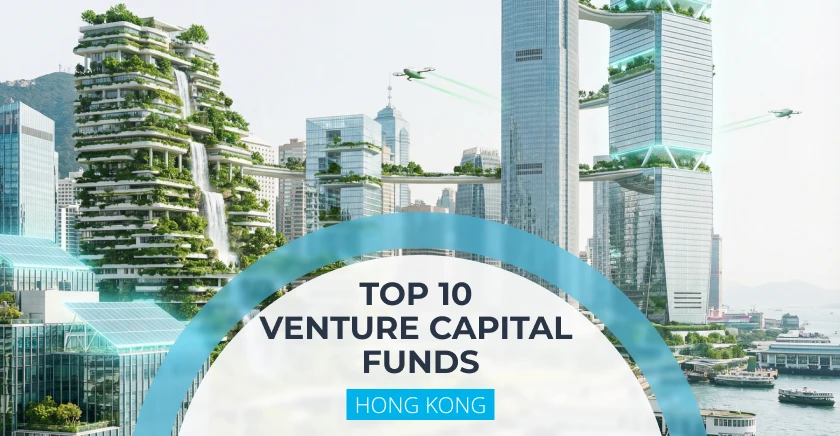
The physical manifestation of Hong Kong's economic density is entirely unique. The city is a masterpiece of extreme vertical urbanism, forced upwards by strict geographical constraints. Packed tightly between deep ocean harbors and rugged mountainous terrain, the city has no choice but to engineer complex, high-density vertical solutions.
The architecture of extreme density
Hong Kong holds the absolute global record for high-rise architecture. As of 2026, the city features an astonishing 569 skyscrapers exceeding 150 metres in height. This dramatic urban canyon completely dwarfs the skylines of other major global hubs. The sheer volume of these structures dictates how the city handles energy consumption, telecommunications signal propagation, and microclimate management.
To contextualize this extreme density, the following breakdown compares Hong Kong against other global skyscraper capitals based on the Council on Tall Buildings and Urban Habitat definitions:
- Hong Kong (569 Skyscrapers): Extreme vertical density forced by island geography and mountainous terrain; creates a deep urban canyon effect.
- Shenzhen (400+ Skyscrapers): Rapidly expanding tech hub across the border; holds the record for the most buildings exceeding 200 meters.
- New York City (300+ Skyscrapers): The historical pioneer of the skyscraper, dominating the Western Hemisphere's vertical landscape.
The northern metropolis mega-project
To alleviate this hyperdensity and structurally integrate with the mainland's innovation engine, the government has been actively implementing the Northern Metropolis project. This is a monumental spatial re-engineering project covering approximately 300 square kilometers (30,000 hectare) along the northern border. It fundamentally shifts the economic center of gravity away from traditional southern financial districts in Hong Kong Island to new towns in Yuen Long, Tin Shui Wai and Fanling, creating a contiguous economic belt.
The strategy relies on a large-scale land disposal approach to expedite development, converting massive tracts of legacy agricultural and brownfield sites into advanced high-rise technological hubs. Pilot areas, such as Hung Shui Kiu and Ha Tsuen, are using diverse private market mechanisms to fund infrastructure, including the construction of five new railway systems and cross-boundary transport links, with the ultimate goal of creating a seamless innovation corridor with Shenzhen, integrating economic development, innovation, technology infrastructure, and ecological conservation.
Smart mobility and autonomous frameworks
The extreme density of the city has made traditional traffic management obsolete, necessitating a complete shift towards smart mobility and autonomous transit systems. The legal framework has been fundamentally upgraded with the activation of the Road Traffic (Autonomous Vehicles) Regulations (Cap. 374AA), which has established a highly flexible, but rigorously secure, regulatory regime for testing autonomous roads. Alongside this, the Transport Department has promulgated a comprehensive Code of Practice for the trial and pilot use of autonomous vehicles.
Public acceptance of this technology is surprisingly high. Recent academic surveys conducted by the City University of Hong Kong indicate that nearly 50% of local residents believe autonomous vehicle technology is safe and express a willingness to use it. The public heavily prioritizes vehicles with advanced driving capabilities on complex terrain and with low failure rates, which directly reflects the challenging driving conditions on the city's steep and winding roads.
In the field, practical deployment is rapidly accelerating to meet the goals of the Hong Kong Smart City Blueprint 2.048. Heavyweight technology firms like Lenovo have partnered with Applied Science and Technology Research Institute to conduct massive Cellular Vehicle-to-Everything (C-V2X) trials50. This infrastructure allows real-time data streaming between vehicles, pedestrian smartphones and physical traffic grids effectively laying the digital foundation for fully driverless ecosystems50. Concurrently, local pilot programs are actively operating.. In Fairview Park, one of the largest private residential estates in the city, operators such as Kwoon Chung and the Automotive Platforms and Application Systems R&D Centre have successfully deployed autonomous electric people movers with 5G connectivity. This pilot uses the low-density environment of the estate to prove the commercial viability of last-mile driverless transit, while grooming local technical talent for wider adoption of public transport.
Barriers and challenges: structural friction in the innovation engine
Despite the aggressive deployment of capital and physical infrastructure, the city faces significant structural barriers that threaten to throttle its maximum growth velocity. The transition from a traditional financial hub to a deep-tech powerhouse is not without friction.
The primary bottleneck is an acute deficit of highly specialized technical talent. While the city produces world-class financial engineers, corporate lawyers, and compliance officers, it historically lacks the raw volume of deep-tech researchers, machine learning algorithmic designers, and hardware specialists required to staff a 3,000 PFLOPS supercomputing ecosystem. To forcefully resolve this, the government has weaponized its immigration policy through the Top Talent Pass Scheme.
By 2026, the scheme's aggregate list of eligible global institutions was expanded to exactly 200 universities, ensuring a wider net for global intellect. The criteria are intentionally aggressive, granting 24 to 36-month visas without the requirement of securing prior local employment. Furthermore, local universities are now permitted to fill up to 50 percent of their student capacity with non-local self-financing candidates, ensuring a continuous pipeline of imported talent. The visa structure targets three specific demographics:
- Category A: For individuals with an annual income reaching HK$2.5 million or above in the preceding year. This category grants a 36-month stay and attracts proven executive leadership and serial entrepreneurs regardless of academic background.
- Category B: For graduates of eligible top 200 global universities with at least three years of work experience over the past five years. This category grants a 24-month stay and secures mid-level technical management and experienced engineers.
- Category C: For recent graduates of eligible top 200 global universities with less than three years of experience (capped at a 10,000 quota). This category grants a 24-month stay and imports aggressive, young talent to populate junior engineering and research roles within local startups.
A secondary, yet massive, challenge is the sheer cost and complexity of spatial reorganization. The execution of the Northern Metropolis requires the systematic eviction, compensation, and relocation of hundreds of legacy industrial and brownfield operators. The legal and financial complexity of clearing this land, combined with the exorbitant base cost of construction in a mountainous island geography, places extreme pressure on project timelines and municipal budgets.
Finally, regulatory and bureaucratic latency remains a hurdle for institutional innovation. Within the corporate venture capital sector, the speed of execution is heavily compromised. With 51 percent of corporate venture funds citing bureaucratic decision-making as a major roadblock, traditional conglomerates struggle to match the deployment velocity of nimble, crypto-native funds or aggressive family offices. Additionally, cross-boundary data flow regulations present an ongoing challenge.
While the hardware infrastructure connecting Hong Kong and Shenzhen is physically robust, navigating the complex data privacy and security regulations required to train localized artificial intelligence models on mainland datasets requires constant, high-level diplomatic and regulatory maneuvering. Overcoming these barriers will dictate whether the city simply participates in the next technological cycle or dominates it entirely.